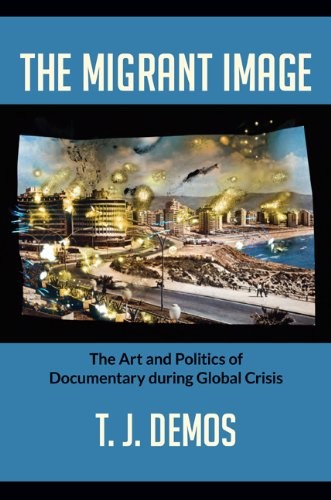
The Migrant Image: The Art and Politics of Documentary during Global Crisis
0
0
As an Amazon Associate and affiliate partner, Menrva Books earns from qualifying purchases. Learn more
Author Description
Demos examines the ways contemporary artists have reinvented documentary practices in their representations of mobile lives: refugees, migrants, the stateless, and the politically dispossessed. He presents a sophisticated analysis of how artists from the United States, Europe, North Africa, and the Middle East depict the often ignored effects of globalization and the ways their works connect viewers to the lived experiences of political and economic crisis. Demos investigates the cinematic approaches Steve McQueen, the Otolith Group, and Hito Steyerl employ to blur the real and imaginary in their films confronting geopolitical conflicts between North and South. He analyzes how Emily Jacir and Ahlam Shibli use blurs, lacuna, and blind spots in their photographs, performances, and conceptual strategies to directly address the dire circumstances of dislocated Palestinian people. He discusses the disparate interventions of Walid Raad in Lebanon, Ursula Biemann in North Africa, and Ayreen Anastas and Rene Gabri in the United States, and traces how their works offer images of conflict as much as a conflict of images. Throughout Demos shows the ways these artists creatively propose new possibilities for a politics of equality, social justice, and historical consciousness from within the aesthetic domain."--P. [4] of cover.
Menrva's Summary
THE THESIS
This book investigates how contemporary artists utilize and redefine documentary practices to represent the experiences of global crises and displaced populations. T. J. Demos, drawing on his expertise in art criticism and theory, analyzes the works of artists from diverse regions including the United States, Europe, North Africa, and the Middle East. He examines how these artists confront the often-overlooked consequences of globalization and political instability, using their art to connect viewers to the realities of economic and social upheaval. The analysis delves into specific artistic strategies, such as blurring reality and imagination, employing visual gaps, and creating a 'conflict of images' to challenge viewers and propose new avenues for social justice and historical awareness.
THE SCOPE MAP
- Analysis of contemporary artists reinventing documentary practices.
- Focus on representations of refugees, migrants, the stateless, and the politically dispossessed.
- Examination of artists from the United States, Europe, North Africa, and the Middle East.
- Discussion of how art depicts the effects of globalization and political/economic crisis.
- In-depth look at cinematic approaches by Steve McQueen, the Otolith Group, and Hito Steyerl.
- Analysis of photographic and performance strategies by Emily Jacir and Ahlam Shibli concerning Palestinian people.
- Exploration of interventions by Walid Raad, Ursula Biemann, and Ayreen Anastas & Rene Gabri.
- Exploration of how art can offer new possibilities for politics of equality and social justice.
THE AUTHORITY PERSPECTIVE
The book is recognized for its sophisticated analysis of how contemporary artists engage with global crises through documentary practices. Critics and scholars note Demos's insightful examination of artists who challenge viewers' perceptions and connect them to the lived experiences of displaced populations. The work is appreciated for its exploration of diverse artistic strategies, from cinematic techniques to photographic interventions, that highlight the complexities of globalization and political instability. It is seen as a significant contribution to understanding the role of art in fostering social justice and historical consciousness.
Page Count:
368
Publication Date:
2013-01-01
ISBN-10:
0822353261
ISBN-13:
9780822353263
Art
History
Non-Fiction
Art History
Migration Studies
Documentary photography
Globalization
Community Tags
Similar Books














