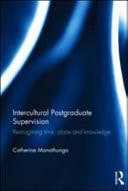
Intercultural Postgraduate Supervision
0
0
As an Amazon Associate and affiliate partner, Menrva Books earns from qualifying purchases. Learn more
Author Description
The Impact Of Globalisation And Aggressive Marketing By Universities Has Increased The Flow Of International Or Culturally Diverse Students Enrolling In Postgraduate Research Degree Programs Outside Their Own Countries. As Access To Postgraduate Education Widens, More Local Culturally Diverse And Indigenous Students Are Also Enrolling In Higher Degree Studies. As A Result, Significantly More Academics Now Engage In Intercultural Supervision Or Supervising Students Who Are Culturally Different To Themselves. This Book Argues That Empowering Intercultural Supervision Can Result From More Nuanced, Critical And Theoretically-based Understandings Of Time, Place And Knowledge. It Shows How A Range Of 'southern' Theories (including Postcolonial, Indigenous, Feminist, Social And Cultural Geography Theories) About History, Geography And Knowledge Can Offer Fresh Insights Into Intercultural Supervision. The Author Suggests That By Using The Conceptual Tools Offered By These Southern Theories, The More Complex But Potentially Rich Aspects Of Intercultural Supervision Can Be Better Understood And Grappled With. In Particular, These Theories Enable Us To Challenge Assumptions About The Universality And Timelessness Of Northern Knowledge, And To Create Space For The Recovery And Further Development Of Southern, Eastern And Indigenous Knowledges Within Intercultural Supervision. This Book Will Be Of Value To Academic Supervisors And Postgraduate Students, Especially Those Engaged In Intercultural Supervision, As Well As Researchers And Scholars In The Field Of Higher Education-- Provided By Publisher.
Menrva's Summary
THE THESIS
This book investigates how the integration of 'southern' theoretical frameworks can transform the practice of postgraduate supervision in an increasingly globalized academic landscape. Catherine Manathunga, an expert in higher education and academic development, argues that traditional 'northern' models of supervision are often insufficient for the complexities of intercultural student-supervisor relationships. By applying postcolonial, indigenous, and feminist theories, the author provides a critical framework for supervisors to navigate the nuances of time, place, and diverse knowledge systems. The work serves as a guide for re-evaluating pedagogical approaches to ensure more equitable and effective research training.
THE SCOPE MAP
What You Will Find
- Analysis of the impact of globalization and university marketing on postgraduate enrollment trends.
- Application of postcolonial, indigenous, and social geography theories to the supervisory process.
- Critical examination of the assumptions regarding the universality of northern knowledge systems.
- Methodological tools for incorporating southern and eastern perspectives into academic research training.
THE AUTHORITY PERSPECTIVE
Experts in higher education recognize this text as a significant contribution to the discourse on internationalization and pedagogical equity. Readers frequently note the academic density of the prose, which serves as a foundational resource for supervisors seeking to improve their intercultural competence.
Page Count:
198
Publication Date:
2014-01-01
Publisher:
Taylor & Francis Group
ISBN-10:
0203111958
ISBN-13:
9780203111956
Academic Research
Higher Education
Supervision Of
Education higher
Education
Sociology
Community Tags
Similar Books