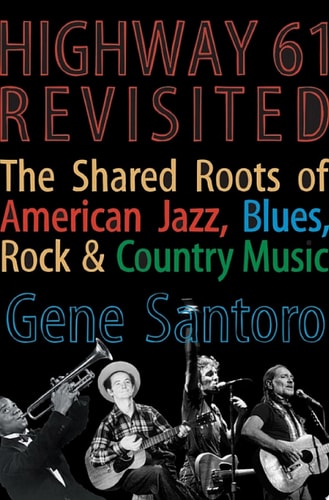
Highway 61 Revisited: The Tangled Roots of American Jazz, Blues, Rock, & Country Music
0
0
As an Amazon Associate and affiliate partner, Menrva Books earns from qualifying purchases. Learn more
Author Description
What do Louis Armstrong, Ray Charles, Bob Dylan, Willie Nelson, Tom Waits, Cassandra Wilson, and Ani DiFranco have in common? In Highway 61 Revisited, acclaimed music critic Gene Santoro says the answer is jazz--not just the musical style, but jazz's distinctive ambiance and attitudes. As legendary bebop rebel Charlie Parker once put it, "If you don't live it, it won't come out of your horn." Unwinding that Zen-like statement, Santoro traces how jazz's existential art has infused outstanding musicians in nearly every wing of American popular music--blues, folk, gospel, psychedelic rock, country, bluegrass, soul, funk, hiphop--with its parallel process of self-discovery and artistic creation through musical improvisation. Taking less-traveled paths through the last century of American pop, Highway 61 Revisited maps unexpected musical and cultural links between such apparently disparate figures as Louis Armstrong, Willie Nelson, Bob Dylan and Herbie Hancock; Miles Davis, Lenny Bruce, The Grateful Dead, Bruce Springsteen, and many others. Focusing on jazz's power to connect, Santoro shows how the jazz milieu created a fertile space "where whites and blacks could meet in America on something like equal grounds," and indeed where art and entertainment, politics and poetry, mainstream culture and its subversive offshoots were drawn together in a heady mix whose influence has proved both far-reaching and seemingly inexhaustible. Combining interviews and original research, and marked throughout by Santoro's wide ranging grasp of cultural history, Highway 61 Revisited offers readers a new look at--and a new way of listening to--the many ways jazz has colored the entire range of American popular music in all its dazzling profusion.
Menrva's Summary
THE THESIS
This book investigates the pervasive influence of jazz aesthetics and improvisational philosophy on the broader spectrum of American popular music. Gene Santoro, a veteran music critic, utilizes a century of cultural history and personal interviews to argue that the 'jazz attitude'—a commitment to self-discovery and spontaneous creation—serves as the connective tissue linking disparate genres like blues, folk, country, and rock. He posits that this improvisational ethos provided a unique social and artistic space for cross-cultural exchange in the United States.
THE SCOPE MAP
What You Will Find
- Analysis of the intersection between jazz, blues, folk, gospel, rock, and hip-hop.
- Comparative studies of artists ranging from Louis Armstrong and Miles Davis to Bob Dylan and Willie Nelson.
- Examination of the social role of jazz as a site for racial integration and cultural subversion.
Scope Limits
- The text does not provide a comprehensive technical history of jazz music theory.
- It does not offer an exhaustive biography of every musician mentioned.
THE AUTHORITY PERSPECTIVE
Critics and music historians frequently note the breadth of Santoro's cultural synthesis, praising his ability to draw connections between seemingly unrelated musical traditions. Scholars often highlight this work as a valuable resource for understanding the sociological impact of jazz beyond its traditional genre boundaries.
Page Count:
320
Publication Date:
2004-01-01
Publisher:
Oxford University Press
ISBN-10:
0190288604
ISBN-13:
9780190288600
Music
American History
Rock
Blues
Cultural History
Jazz
Music american
Traditional Folk
Popular music
Music Criticism
Humanities
Country
Community Tags
Similar Books