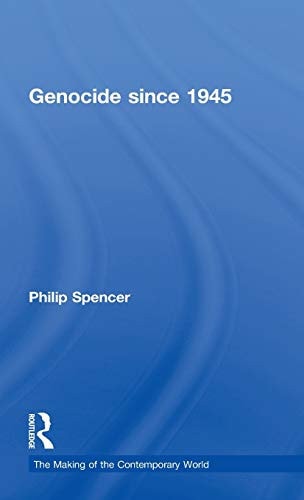
Genocide Since 1945
0
0
As an Amazon Associate and affiliate partner, Menrva Books earns from qualifying purchases. Learn more
Author Description
In 1948 the United Nations passed the Genocide Convention. The international community was now obligated to prevent or halt what had hitherto, in Winston Churchill's words, been a "crime without a name", and to punish the perpetrators. Since then, however, genocide has recurred repeatedly. Millions of people have been murdered by sovereign nation states, confident in their ability to act with impunity within their own borders. Tracing the history of genocide since 1945, and looking at a number of cases across continents and decades, this book discusses a range of critical and inter-connected issues such as: why this crime is different, why exactly it is said to be "the crime of crimes" how each genocide involves a deadly triangle of perpetrators (with their collaborators), victims and bystanders as well as rescuers the different stages that genocides go through, from conception to denial the different explanations that have been put forward for why genocide takes placeand the question of humanitarian intervention.Genocide since 1945 aims to help the reader understand how, when, where and why this crime has been committed since 1945, why it has proven so difficult to halt or prevent its recurrence, and what now might be done about it. It is essential reading for all those interested in the contemporary world
Menrva's Summary
THE THESIS
This book investigates the persistent failure of the international community to prevent or halt genocide despite the legal framework established by the 1948 Genocide Convention. Philip Spencer, a scholar specializing in the study of genocide and political violence, utilizes a comparative historical approach to analyze why sovereign states continue to commit mass atrocities with impunity. The text provides a structured framework for understanding the mechanics of genocide, examining the roles of perpetrators, victims, and bystanders while evaluating the efficacy of humanitarian intervention in the post-1945 era.
THE SCOPE MAP
What You Will Find
- A historical survey of major genocidal events occurring across multiple continents since 1945.
- A conceptual model of the 'deadly triangle' involving perpetrators, victims, and bystanders.
- An analysis of the stages of genocide, ranging from initial conception to post-event denial.
- A critical evaluation of international legal mechanisms and the challenges of humanitarian intervention.
THE AUTHORITY PERSPECTIVE
Scholars and students of international relations frequently cite this work as a clear, accessible introduction to the complexities of genocide studies. Experts highlight the author's ability to synthesize dense legal and historical data into a coherent framework for understanding contemporary mass violence.
Page Count:
176
Publication Date:
2012-06-25
Publisher:
Taylor & Francis Group
ISBN-10:
020311504X
ISBN-13:
9780203115046
True Crime
History
Crime
International relations
Human rights
Crimes Against
Genocide
Community Tags
Other Editions(4)


Similar Books