Gender in Late Medieval and Early Modern Europe
0
0
As an Amazon Associate and affiliate partner, Menrva Books earns from qualifying purchases. Learn more
Author Description
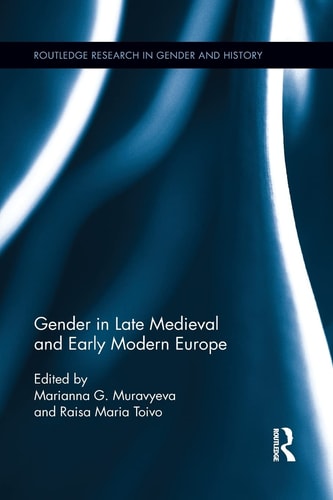
This Project Is An Attempt To Challenge The Canonical Gender Concept While Trying To Specify What Gender Was In The Medieval And Early Modern World. Despite The Emphasis On Individual, Identity And Difference That Past Research Claims, Much Of This History Still Focuses On Hierarchical Or Dichotomous Paring Of Masculinity And Femininity (or Male And Female). The Emphasis On Differences Has Been Largely Based On The Research Of Such Topics As Premarital Sex, Religious Deviance, Rape And Violence; These Are Topics That Were, In The Early Modern Society, Criminal Or At Least Easily Marginalizing. The Central Focus Of The Book Is To Test, Verify And Challenge The Methodology And Use The Concept(s) Of Gender Specifically Applicable To The Period Of Great Change And Transition. The Volume Contains Two Theoretical Sections Supplemented By Case-studies Of Gender Through Specific Practices Such As Mysticism, Witchcraft, Crime, And Legal Behaviour. The First Section, Concepts, Analyzes Certain Useful Notions, Such As Patriarchy And Morality. The Second Section, Identities, Seeks To Deepen This Analysis Into The Studies Of Female Identities In Various Situations, Cultures And Dimensions And To Show The Fluidity And Flexibility Of What Is Called Femininity Nowadays. The Third Part, Practises, Seeks To Rethink The Bigger Narratives Through The Case-studies Coming From Northern Europe To See How Conventional Ideas Of Gender Did Not Work In This Particular Region. The Case Studies Also Challenge The Established Narratives In Such Well-research Historiographies As Witchcraft And Sexual Offences And At The Same Time Suggest New Insights For The Developing Fields Of Study, Such As History Of Homicide.
Menrva's Summary
THE THESIS
This volume investigates how the rigid, dichotomous concepts of gender traditionally applied to the medieval and early modern periods fail to capture the actual fluidity and complexity of historical social structures. Editors Marianna Muravyeva and Raisa Maria Toivo assemble a collection of scholarly contributions that challenge canonical historical narratives by examining how gender functioned outside of simple hierarchical pairings. By integrating theoretical frameworks with specific regional case studies, the authors argue for a more nuanced understanding of identity, morality, and legal behavior during a time of significant societal transition.
THE SCOPE MAP
What You Will Find
- Theoretical analysis of foundational concepts including patriarchy and morality.
- Examination of female identities across diverse cultural and situational dimensions.
- Empirical case studies focusing on Northern Europe to test conventional gender narratives.
- Research into specific practices such as mysticism, witchcraft, homicide, and legal behavior.
THE AUTHORITY PERSPECTIVE
Scholars and historians recognize this volume as a critical intervention in the historiography of gender, particularly for its focus on Northern European contexts. The text is noted for its academic rigor and its utility in bridging the gap between abstract gender theory and concrete historical practice.
Page Count:
240
Publication Date:
1900-01-01
ISBN-10:
0203110609
ISBN-13:
9780203110607
History
Gender Studies
Sociology
European History
Community Tags
Other Editions(3)

Similar Books


Reader Comments
Share Your Thoughts
No comments yet. Be the first to share your thoughts!