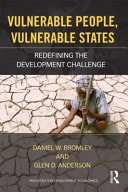
Vulnerable people, vulnerable states: redefining the development challenge
0
0
As an Amazon Associate and affiliate partner, Menrva Books earns from qualifying purchases. Learn more
Author Description
Over Five Decades Of Economic And Technical Assistance To The Countries Of Africa And The Middle East Have Failed To Improve The Life Prospects For Over 1.4 Billion People Who Remain Vulnerable. Billions Of Dollars Have Been Spent On Such Assistance And Yet Little Progress Has Been Made. Persistent Hunger And Hopelessness Threaten More Than Individuals And Families. These Conditions Foster Political Alienation That Can Easily Metastasize Into Hostility And Aggression. Recent Uprisings In The Middle East Are Emblematic Of This Problem. Vulnerable People Give Rise To Vulnerable States. This Book Challenges The Dominant Catechism Of Development Assistance By Arguing That The Focus On Economic Growth (and Fighting Poverty) Has Failed To Bring About The Promised Convergence. Poor People And Poor Countries Have Clearly Not Closed The Gap On The Rich Industrialized World. Pursuing Convergence Has Been A Failure. Here We Argue That Development Assistance Must Be Reconstituted To Focus On Creating Economic Coherence. People Are Vulnerable Because The Economies In Which They Are Embedded Do Not Cohere. The Absence Of Economic Coherence Means That Economic Processes Do Not Work As They Must If Individual Initiative Is To Result In Improved Livelihoods. Weak And Vulnerable States Must Be Strengthened So That They Can Become Partners In The Process Of Creating Economic Coherence. When Economies Do Not Cohere, Countries Become Breeding Grounds For Localized Civil Conflicts That Often Spill Across National Borders.
Menrva's Summary
THE THESIS
This book investigates why decades of international economic and technical assistance have failed to improve the life prospects of over 1.4 billion people living in vulnerable states. Daniel W. Bromley, an expert in institutional economics, critiques the prevailing focus on economic growth and poverty reduction as the primary metrics for development. He argues that these strategies have failed to achieve convergence between poor and industrialized nations, proposing instead that development assistance must be redirected toward fostering economic coherence within these states. By strengthening the structural integrity of national economies, Bromley suggests that states can better support individual initiative and mitigate the risks of political alienation and civil conflict.
THE SCOPE MAP
What You Will Find
- A critical analysis of five decades of international economic and technical assistance programs.
- A theoretical framework defining economic coherence as the essential prerequisite for individual livelihood improvement.
- An examination of the link between economic instability and the rise of political hostility and regional conflict.
- A proposed shift in development policy from growth-centric models to state-strengthening and structural integration.
THE AUTHORITY PERSPECTIVE
Experts in development economics recognize this work as a significant challenge to traditional aid paradigms. Readers frequently note the academic rigor of the author's argument and the clarity with which he connects macroeconomic policy to localized political outcomes.
Page Count:
160
Publication Date:
2012-01-01
Publisher:
Routledge
ISBN-10:
0415534518
ISBN-13:
9780203113325
Economics
International relations
Public Policy
Community Tags
Similar Books