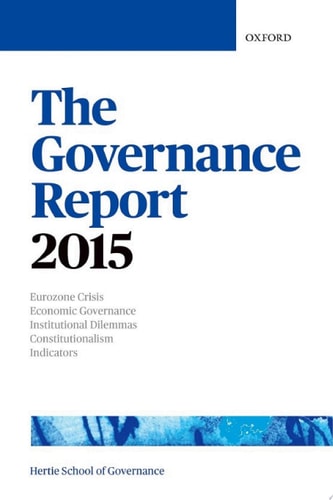
The Governance Report 2015
0
0
As an Amazon Associate and affiliate partner, Menrva Books earns from qualifying purchases. Learn more
Author Description
The promise of an ever-closer union that has guided Europe from the Treaty of Rome to the present time rests on the evolution of democratic governance to meet the many challenges that European communities face. Now after years of managing the financial and fiscal crises, the European Union has to take stock and focus on the issues that will fundamentally shape its long-term prospects. The Governance Report 2015 takes an interdisciplinary approach, examining what is needed to achieve stability in the Eurozone and the full integration of the European single market, how decision-making has changed, and how crisis management has affected the Union's democratic legitimacy. A set of governance indicators will trace how European states have become more alike or more different over time. Ultimately, the Report seeks answers to the question of what can make Europe succeed, fail, or muddle through from a governance perspective.
Menrva's Summary
THE THESIS
This report investigates the structural and democratic requirements necessary for the long-term stability and integration of the European Union following years of fiscal crisis. The Hertie School of Governance utilizes an interdisciplinary framework to assess the evolution of European institutions, drawing on comparative political data and economic analysis. The authors argue that the future of the Union depends on reconciling crisis management strategies with the maintenance of democratic legitimacy across member states.
THE SCOPE MAP
What You Will Find
- Comparative governance indicators tracking state convergence and divergence
- Analysis of decision-making processes within EU institutions
- Evaluation of Eurozone stability and single market integration
Scope Limits
- Does not provide specific legislative proposals for individual member states
- Focuses primarily on institutional governance rather than cultural or social integration
THE AUTHORITY PERSPECTIVE
Experts recognize this report as a rigorous analytical resource for understanding the institutional mechanics of the European Union. Readers frequently note the academic density of the prose, which serves as a foundational reference for students and policymakers interested in European political economy.
Page Count:
146
Publication Date:
2015-01-01
Publisher:
OUP Oxford
ISBN-10:
0191053724
ISBN-13:
9780191053726
Economics
Public Policy
International relations
Governance
Community Tags
Similar Books