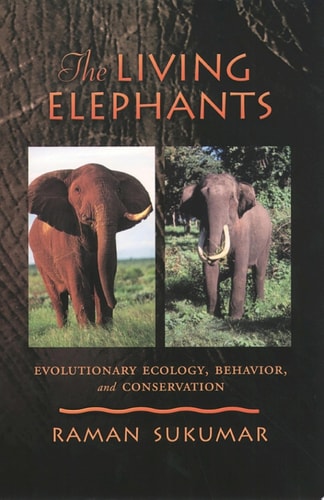
The Living Elephants: Evolutionary Ecology, Behaviour, and Conservation
0
0
As an Amazon Associate and affiliate partner, Menrva Books earns from qualifying purchases. Learn more
Author Description
The Living Elephants is the authoritative resource for information on both Asian and African elephants. From the ancient origins of the proboscideans to the present-day crisis of the living elephants, this volume synthesizes the behavior, ecology and conservation of elephants, while covering also the history of human interactions with elephants, all within the theoretical framework of evolutionary biology. The book begins with a survey of the 60-million year evolutionary history of the proboscideans emphasizing the role of climate and vegetation change in giving rise to a bewildering array of species, but also discussing the possible role of humans in the late Pleistocene extinction of mastodonts and mammoths. The latest information on the molecular genetics of African and Asian elephants and its taxonomic implications are then presented. The rise of the elephant culture in Asia, and its early demise in Africa are traced along with an original interpretation of this unique animal-human relationship. The book then moves on to the social life of elephants as it relates to reproductive strategies of males and females, development of behavior in young, communication, ranging patterns, and societal organization. The foraging strategies of elephants, their impact on the vegetation and landscape are then discussed. The dynamics of elephant populations in relation to hunting for ivory and their population viability are described with the aid of mathematical models. A detailed account of elephant-human interactions includes a treatment of crop depredation by elephants in relation to their natural ecology, manslaughter by elephants, habitat manipulation by humans, and a history of the ivory trade and poaching in the two continents. The ecological information is brought together in the final chapter to formulate a set of pragmatic recommendations for the long-term conservation of elephants. The broadest treatment of the subject yet undertaken, by one of the leading workers in
Menrva's Summary
THE THESIS
This volume investigates the evolutionary history, behavioral ecology, and conservation status of Asian and African elephants within the framework of modern evolutionary biology. Raman Sukumar, a recognized expert in elephant research, synthesizes decades of field data, molecular genetics, and historical analysis to address the complex challenges facing these species. The text argues that understanding the long-term survival of elephants requires a multidisciplinary approach that integrates their biological needs with the realities of human-elephant conflict and historical exploitation.
THE SCOPE MAP
What You Will Find
- A 60-million-year evolutionary history of proboscideans.
- Analysis of molecular genetics and taxonomic implications for modern elephant species.
- Examination of social structures, reproductive strategies, and foraging behaviors.
- Mathematical modeling of population dynamics in relation to ivory poaching.
- A comprehensive review of human-elephant interactions, including crop depredation and habitat loss.
Scope Limits
- The text focuses primarily on biological and ecological data, rather than anecdotal or cultural narratives.
- It does not provide a comprehensive guide to elephant husbandry or captive management.
THE AUTHORITY PERSPECTIVE
Experts and researchers in the field of mammalogy consider this work a foundational reference for understanding the complexities of elephant biology and conservation. Readers frequently note the academic density of the prose, which makes it a primary resource for students and professionals rather than casual readers.
Page Count:
478
Publication Date:
2003-01-01
Publisher:
Oxford University Press
ISBN-10:
0190283084
ISBN-13:
9780190283087
Science
Natural History
Ecology
Zoology
Wildlife conservation
Biology
Nature
Conservation
Elephants
Community Tags
Similar Books