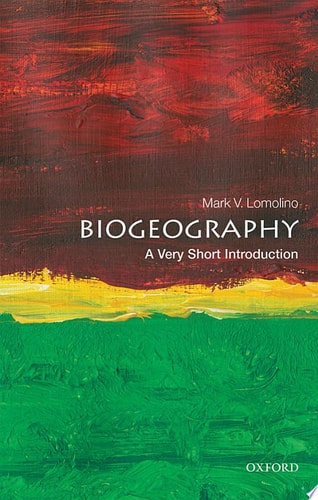
Biogeography: A Very Short Introduction
0
0
As an Amazon Associate and affiliate partner, Menrva Books earns from qualifying purchases. Learn more
Author Description
Biogeography is the study of geographic variation in all characteristics of life - ranging from genetic, morphological and behavioural variation among regional populations of a species, to geographic trends in diversity of entire communities across our planet's sufrace. From the ancient hunters and gatherers to the earliest naturalists, Charles Darwin, Alfred Russel Wallace, and scientists today, the search for patterns in life has provided insights that proved invaluable for understanding the natural world. And many, if not most, of the compelling kaleidoscope of patterns in biological diversity make little sense unless placed in an explicit geographic context. The Very Short Introduction explains the historical development of the field of biogeography, its fundamental tenets, principles and tools, and the invaluable insights it provides for understanding the diversity of life in the natural world. As Mark Lomolino shows, key questions such as where species occur, how they vary from place to place, where their ancestors occurred, and how they spread across the globe, are essential for us to develop effective strategies for conserving the great menagerie of life across our planet. ABOUT THE SERIES: The Very Short Introductions series from Oxford University Press contains hundreds of titles in almost every subject area. These pocket-sized books are the perfect way to get ahead in a new subject quickly. Our expert authors combine facts, analysis, perspective, new ideas, and enthusiasm to make interesting and challenging topics highly readable.
Menrva's Summary
THE THESIS
How do geographic patterns and historical processes shape the distribution and diversity of life across the planet? Mark V. Lomolino, a prominent researcher in the field, synthesizes the foundational principles of biogeography to explain how species variation and community structures are intrinsically linked to their spatial context. By tracing the evolution of the discipline from early naturalists to modern conservation science, the author establishes a framework for understanding the complex interactions between organisms and their environments.
THE SCOPE MAP
What You Will Find
- Historical development of biogeography from Darwin and Wallace to contemporary research
- Fundamental tenets regarding species occurrence, dispersal, and geographic variation
- Methodologies for analyzing biodiversity patterns across regional and global scales
- Applications of biogeographic data in modern conservation strategies
Scope Limits
- Does not provide an exhaustive technical manual for field data collection
- Does not cover specific regional case studies in extreme depth due to the concise nature of the series
THE AUTHORITY PERSPECTIVE
Experts and readers recognize this text as a highly accessible entry point for students and professionals seeking a concise overview of biogeographic theory. The prose maintains a balance between academic rigor and readability, making it a standard introductory resource for those interested in the spatial dimensions of biological diversity.
Page Count:
175
Publication Date:
2020-01-01
Publisher:
OUP Oxford
ISBN-10:
0192590251
ISBN-13:
9780192590251
Science
Natural History
Earth Sciences
Biogeography
Earth Science
Biology
Ecology