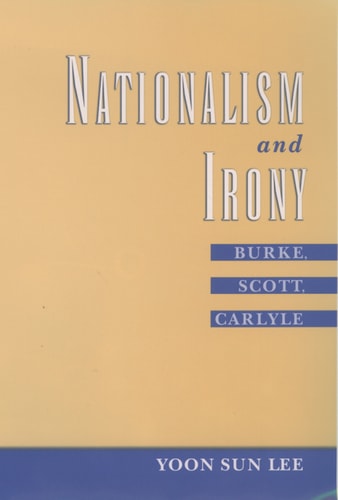
Nationalism and Irony: Burke, Scott, Carlyle
0
0
As an Amazon Associate and affiliate partner, Menrva Books earns from qualifying purchases. Learn more
Author Description
Nationalism and irony are two of the most significant developments of the Romantic period, yet they have not been linked in depth before now. This study shows how Romantic nationalism in Britain explored irony's potential as a powerful source of civic cohesion. The period's leading conservative voices, self-consciously non-English figures such as Edmund Burke, Walter Scott, and Thomas Carlyle, accentuated rather than disguised the anomalous character of Britain's identity, structure, and history. Their irony publicly fractured while upholding sentimental fictions of national wholeness. Britain's politics of deference, its reverence for tradition, and its celebration of productivity all became not only targets of irony but occasions for its development as a patriotic institution. This study offers a different view of both Romantic irony and Romantic nationalism: irony is examined as an outgrowth of commercial society and as a force that holds together center and periphery, superiors and subordinates, in the culture of nationalism.
Menrva's Summary
THE THESIS
This study investigates the intersection of Romantic nationalism and irony, questioning how these two concepts functioned together to shape British identity during the Romantic period. Yoon Sun Lee, an academic scholar, utilizes historical analysis and literary theory to argue that irony served as a mechanism for maintaining civic cohesion. By examining the works of Edmund Burke, Walter Scott, and Thomas Carlyle, the author demonstrates how these figures used irony to navigate the contradictions of British national identity and social structure.
THE SCOPE MAP
What You Will Find
- Analysis of the works of Edmund Burke, Walter Scott, and Thomas Carlyle
- Exploration of irony as a tool for patriotic institution-building
- Examination of the relationship between commercial society and national identity
Scope Limits
- The study focuses specifically on British Romanticism and does not provide a comprehensive global history of nationalism.
THE AUTHORITY PERSPECTIVE
Scholars recognize this text as a significant contribution to the study of Romantic-era political thought and literary irony. Readers frequently note the academic density of the prose, which is intended for an audience familiar with literary theory and British history.
Page Count:
232
Publication Date:
2004-01-01
Publisher:
Oxford University Press
ISBN-10:
019028997X
ISBN-13:
9780190289973
English & College Success
Nationalism
Literary Criticism
English
British History
Great Britain
Irony
Romanticism
Political Theory
Community Tags
Similar Books