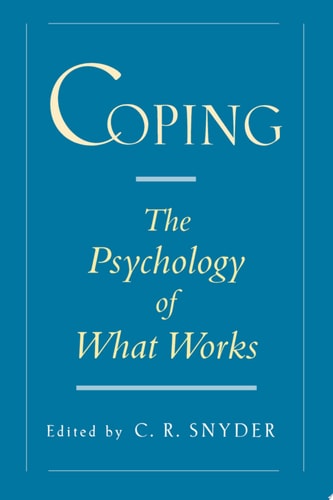
Coping: The Psychology of What Works
0
0
As an Amazon Associate and affiliate partner, Menrva Books earns from qualifying purchases. Learn more
Author Description
Most people take the process of coping for granted as they go about their daily activities. In many ways, coping is like breathing, an automatic process requiring no apparent effort. However, when people face truly threatening events--what psychologists call stressors--they become acutely aware of the coping process and respond by consciously applying their day-to-day coping skills. Coping is a fundamental psychological process, and people's skills are commensurately sophisticated. This volume builds on people's strengths and emphasizes their role as positive copers. It features techniques for preventing psychological problems and breaks from the traditional research approach, which is modeled on medicine and focuses on pathology and treatment. Collecting both award-winning research and new findings, this book may well set the agenda for research on stress and coping for the next century. These provocative and readable essays explore a variety of topics, including reality negotiation, confessing through writing, emotional intelligence, optimism, hope, mastery-oriented thinking, and more. Unlike typical self-help books available at any newsstand, this volume features the work of some of the most eminent researchers in the field. Yet like those books it is written for the general reader, as well as for the specialist, and includes numerous practical suggestions and techniques. It will prove an invaluable tool for a wide range of readers.
Menrva's Summary
THE THESIS
This volume investigates the fundamental psychological mechanisms of coping, shifting the focus from pathology to the inherent strengths and positive strategies individuals use to manage stressors. C. R. Snyder, a prominent researcher in the field, compiles essays from eminent scholars to present a framework that emphasizes proactive psychological health. The text moves away from traditional medical models of treatment to explore how human cognition, such as hope and optimism, functions as a preventative tool against psychological distress.
THE SCOPE MAP
What You Will Find
- Analysis of cognitive strategies including reality negotiation and mastery-oriented thinking
- Examination of the role of emotional intelligence in stress management
- Practical techniques for utilizing writing as a tool for confession and processing
- Research-based insights into the nature of hope and optimism
Scope Limits
- Does not provide clinical diagnostic criteria for specific mental health disorders
- Does not offer a singular, step-by-step therapeutic program for acute crisis intervention
THE AUTHORITY PERSPECTIVE
Experts recognize this volume as a significant departure from traditional clinical literature by prioritizing positive psychology and individual agency. Readers frequently note that while the text maintains high academic standards, the prose remains accessible to both specialists and the general public.
Page Count:
343
Publication Date:
1999-01-01
Publisher:
Oxford University Press
ISBN-10:
0190283718
ISBN-13:
9780190283711
Religion
Psychology
Positive Psychology
Self Help
Introduction to Social WorkWelfare
Mental Health
Community Tags
Similar Books