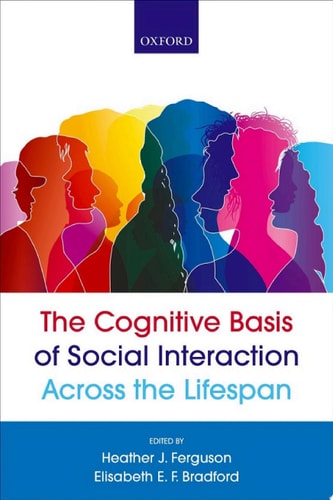
The Cognitive Basis of Social Interaction Across the Lifespan
0
0
As an Amazon Associate and affiliate partner, Menrva Books earns from qualifying purchases. Learn more
Author Description
Social interaction is an important aspect of everyday life and its success (or lack of) impacts heavily on our wellbeing. A vital part of successful social interaction is the ability to understand and predict events in terms of other people's mental states, such as their intentions, beliefs, emotions, and desires (termed Theory of Mind, ToM). Children typically develop the necessary skills for social interaction around four years old, and as healthy adults, we engage in social interaction frequently and seemingly without a great deal of difficulty. This book explores how human social interactive abilities change across the lifespan, looking at infancy, early and middle childhood, adolescence and young adulthood, adulthood, and older age, as well as healthy and atypical development. Over nine chapters, leading researchers in the field provide an overview of the most recent findings, contribute to key debates on social phenomena (including their underlying mechanisms, environmental triggers, and neural basis), and outline innovative avenues for future directions. Written in an accessible style, this book will appeal to a wide range of readers including academics and students of psychology, neuroscience, psychiatry, linguistics, and philosophy, as well as providing valuable insights for clinicians and practitioners working in the fields of social care, mental health, and education.
Menrva's Summary
THE THESIS
This book investigates how human social interactive abilities, specifically Theory of Mind, evolve and fluctuate across the entire human lifespan. Editor Michael Bergmann compiles contributions from leading researchers to examine the mechanisms, environmental triggers, and neural foundations of social cognition. The text synthesizes current findings to address how these cognitive processes manifest from infancy through older age, covering both typical and atypical developmental trajectories.
THE SCOPE MAP
What You Will Find
- Longitudinal analysis of social cognitive development from infancy to old age
- Examination of Theory of Mind mechanisms and neural correlates
- Comparative studies of healthy versus atypical social development
- Discussion of environmental influences on social interaction
Scope Limits
- Does not provide clinical diagnostic manuals or therapeutic intervention protocols
- Does not focus on non-human primate social cognition
THE AUTHORITY PERSPECTIVE
Experts identify this collection as a comprehensive overview suitable for both academic researchers and practitioners in mental health and education. Readers frequently note the balance between accessible prose and the technical depth required for graduate-level study in psychology and neuroscience.
Page Count:
252
Publication Date:
2021-01-01
Publisher:
OUP Oxford
ISBN-10:
0192581333
ISBN-13:
9780192581334
Psychology
Neuroscience
Developmental Psychology
Community Tags
Similar Books