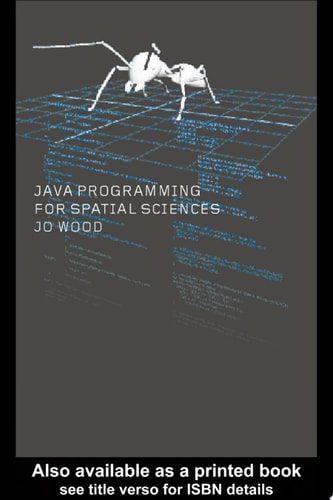
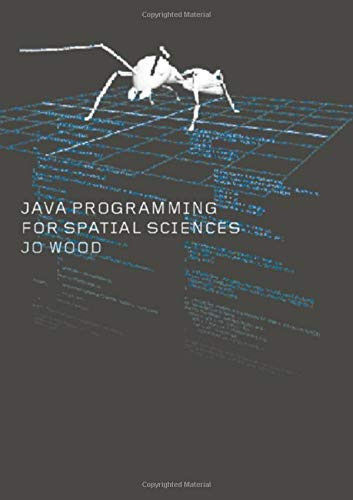
Java Programming for Spatial Sciences
0
0
As an Amazon Associate and affiliate partner, Menrva Books earns from qualifying purchases. Learn more
Author Description
The Java programming language has been one of the most exciting internet-friendly technologies to emerge in the last decade. Java Programming for Spatial Sciences introduces the subject to those who wish to use computers to handle information with a geographical element.The book introduces object-oriented modeling including key concepts such as abstraction, inheritance and encapsulation. It shows how these ideas can be used to model, process and visualize geographic information leading the reader from initial ideas of class design through to the implementation of feature rich raster and vector models of space. It includes some of the more recent developments in internet technologies such as web-based applets, remote communication and XML, showing how these can be used to deliver geographic information in a modern computing environment.The text is aimed at new programmers as well as those in fields such as geography, GIS, remote sensing, archaeology and biology who wish to make use of geographic information. It provides a useful course text for advanced undergraduates and postgraduates in these fields. The material is heavily example-led, and contains programming exercises and quizzes, making it suitable for self-paced learning.
Menrva's Summary
THE THESIS
This book investigates how the Java programming language can be effectively utilized to model, process, and visualize complex geographic information. Jo Wood, an expert in spatial visualization and computing, provides a structured framework for applying object-oriented programming principles to spatial sciences. By bridging the gap between software engineering and geographic analysis, the text enables researchers and students to develop robust tools for handling spatial data in modern computing environments.
THE SCOPE MAP
What You Will Find
- Object-oriented modeling concepts including abstraction, inheritance, and encapsulation
- Implementation strategies for raster and vector models of space
- Integration of internet technologies such as web-based applets and XML for geographic data delivery
- Practical programming exercises and quizzes for self-paced learning
THE AUTHORITY PERSPECTIVE
Experts recognize this text as a foundational resource for students and professionals in GIS, archaeology, and biology who require programming proficiency. Readers frequently note the practical, example-led approach that makes complex software engineering concepts accessible to those primarily focused on spatial analysis.
Page Count:
336
Publication Date:
2002-05-16
Publisher:
Taylor & Francis
ISBN-10:
0203166175
ISBN-13:
9780203166178
Education
Programming
Geography
Computer Science
Community Tags
Other Editions(4)


Similar Books