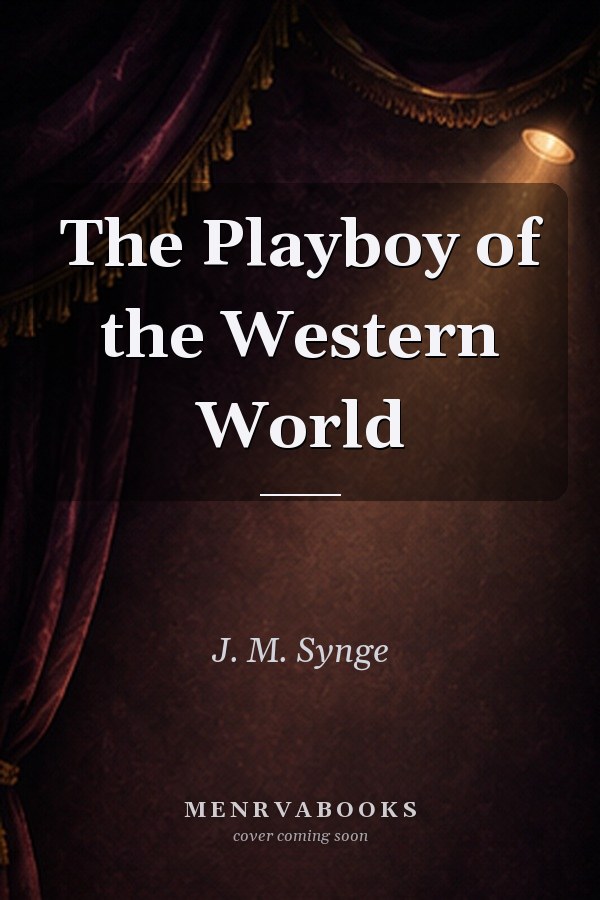
The Playboy of the Western World
0
0
As an Amazon Associate and affiliate partner, Menrva Books earns from qualifying purchases. Learn more
Author Description
A young man stumbles into a rural public house in western Ireland claiming to be on the run after having killed his father. He immediately becomes a source of awe and an object of adoration, and even love. But what happens when the inhabitants of this tiny village find out all is not as the stranger claims? J. M. Synge first presented The Playboy of the Western World at the Abbey Theatre in Dublin on the 26th of January, 1907. The performance immediately offended Irish nationalists by seemingly insulting the Irish people and language, and the general public, by being an offense against moral order. Before it was even finished, it was disrupted by a riot that soon spread out into the city. When it was performed in 1911 in the U.S., the play was again greeted with scorn and the company arrested for an immoral performance. But as Synge himself attempts to explain in the preface to his play, rather than attack Irish Gaelic, he wanted to show the relationship between the imagination of the Irish country people and their speech, which is “rich and living,” and that his use of such language reflects reality in a way missing from other modern drama. He later insisted that his plot was not to be taken as social realism, but died in 1909 before the play finally gained broader appeal in the wider world. Since then the significance of The Playboy of the Western World has been recognized and celebrated both for its characterizations and its rich use of dialect.
Menrva's Summary
THE PULSE
A young man arrives in a remote Irish village claiming to have murdered his father, triggering a series of events that transform him from a fugitive into a local hero. Christy Mahon seeks refuge in a rural public house, where his dramatic confession earns him the admiration of the villagers and the romantic interest of Pegeen Mike. The narrative, structured as a three-act play, explores the tension between the villagers' desire for excitement and the eventual arrival of the truth. As the protagonist navigates his newfound status, he faces the logical constraints of a small, insular community where reputation is built on myth rather than fact.
INSIDE THE PAGES
- Use of Hiberno-English dialect to capture the rhythm of rural Irish speech
- Satirical examination of hero worship and public perception
- Three-act dramatic structure typical of early 20th-century theater
- Exploration of the divide between romanticized imagination and harsh reality
- Character-driven dialogue that emphasizes wit and local color
- Themes of generational conflict and the desire for liberation
- Setting confined to a single rural public house to heighten tension
- Subversion of the traditional heroic archetype through the protagonist's flawed nature
THE COLLECTIVE ECHO
Readers and critics frequently highlight the play's linguistic innovation, noting how Synge utilizes a rich, rhythmic dialect to elevate the mundane lives of his characters. Discussion often centers on the dark comedic elements and the sharp critique of societal hypocrisy regarding morality and fame. While early audiences reacted with hostility due to perceived insults to Irish identity, modern analysis focuses on the play's exploration of the human tendency to construct myths around strangers. The balance between the play's farcical tone and its underlying psychological depth remains a primary subject of academic study. Many observers emphasize that the work serves as a foundational text for understanding the evolution of modern Irish drama.
Page Count:
0
Publication Date:
2013-01-01
Publisher:
Taylor & Francis Group
ISBN-10:
0203168364
ISBN-13:
9780203168363
Drama
Ireland
Irish literature
Plays
Comedy
classic
Community Tags
Other Editions(6)


Similar Books


Reader Comments
Share Your Thoughts
No comments yet. Be the first to share your thoughts!