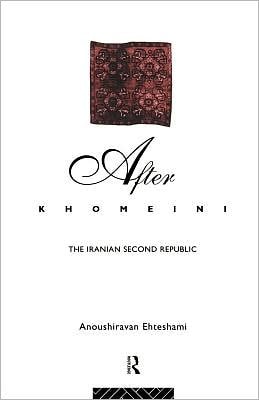
After Khomeini
0
0
As an Amazon Associate and affiliate partner, Menrva Books earns from qualifying purchases. Learn more
Author Description
For Iran the years since Ayatollah Khomeini's death have been dominated by the need for political consolidation and economic reconstruction. The book assesses the critical dilemmas of the regime both previous to and since the demise of its first spiritual leader. The vital issues of political succession and constitutional reform are addressed, contributing to an analysis of the structures and politics of power. How these have reflected upon economic policy is considered with close atttention being given to the reform policies of Rafsanjani. Foreign policy and security issues are discussed in both regional and global terms and include a study of Iranian defence strategy and its controversial re-armament drive. The final chapter examines the direction and context of all of these major policy areas, providing an analysis of whether the Islamic Republic truly represents a revolutionary alternative for the Third World or whether in fact it has developed in time to fall within a similar mould to other notable revolutions, casting by the wayside any uniquely Islamic agenda and alternatives. At the heart of this study is the belief that the Islamic regime has, since the cease-fire with Iraq, but more specifically since Ayatollah Khomeini's death passed into a new stage of development, referred to in the book as the 'Second Republic'.
Menrva's Summary
THE THESIS
This book investigates the political and economic evolution of Iran following the death of Ayatollah Khomeini, specifically examining the transition into what the author terms the 'Second Republic'. Anoushiravan Ehteshami, a scholar specializing in Middle Eastern politics, utilizes a structural analysis of the Iranian state to evaluate how the regime navigated the challenges of succession, constitutional reform, and economic reconstruction. By focusing on the policies of the Rafsanjani era, the author provides a framework for understanding the shift from revolutionary fervor to institutional consolidation.
THE SCOPE MAP
What You Will Find
- Analysis of political succession and constitutional reform within the Islamic Republic.
- Examination of economic policy shifts and the reformist agenda under Rafsanjani.
- Evaluation of Iranian foreign policy, security strategy, and the re-armament drive.
- Comparative study of the Iranian revolution against other global revolutionary models.
THE AUTHORITY PERSPECTIVE
Experts recognize this work as a foundational text for understanding the post-Khomeini transition period in Iran. Readers frequently note the analytical depth regarding the structural changes within the Iranian government and its strategic shift toward regional power consolidation.
Page Count:
0
Publication Date:
1995-01-01
Publisher:
Taylor & Francis, Inc.
ISBN-10:
0203200179
ISBN-13:
9780203200179
History
Government
International relations
Community Tags
Similar Books