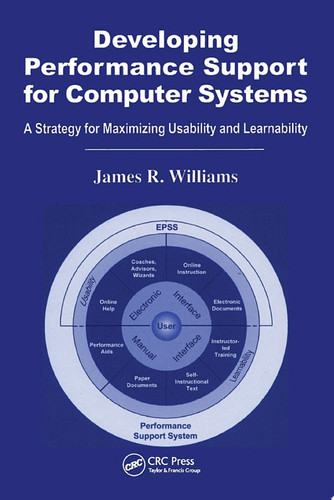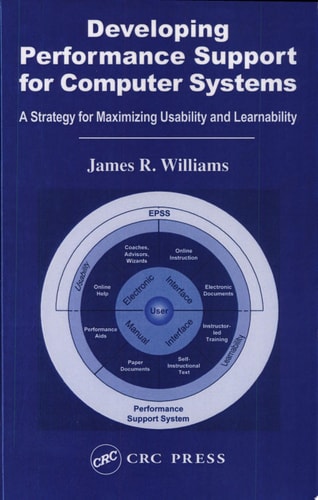
Developing Performance Support for Computer Systems
0
0
As an Amazon Associate and affiliate partner, Menrva Books earns from qualifying purchases. Learn more
Author Description
Developing Performance Support For Computer Systems: A Strategy For Maximizing Usability And Learnability Provides Detailed Planning, Design, And Development Guidance For Generating Performance Support For New Or Upgraded Computer Systems. Performance Support Includes Documentation, Online Help, Coaches And Wizards, Training, And Other Materials Necessary To Enable Users To Perform Their Jobs More Efficiently And Effectively. This Volume Offers A Strategy For Maximizing Ease-of-use And Ease-of-learning Through An Integrated Performance Support Systems Approach. The Text Provides How-to Guidance Throughout That Developers Can Apply Directly To The Design Of Their Performance Support Tools And Products. Rather Than Cover A Few Specific Topic Areas, It Examines The Entire Spectrum Of Performance Support. The Book Explains How To Match Performance Support Methods To Task Requirements, Gives An Overview Of Important User Characteristics, And Provides General Guidance For Presentation, Layout, Formatting, Media Selection, The Use Of Color And Icons, And Accessibility. Evaluation Checklists Are Included In The Appendices And Are Also Available Online. Although This Book Primarily Addresses The Development Of Performance Support For Large Software Systems, The Principles And Approaches Are Valuable For Any Systems Development Environment.
Menrva's Summary
THE THESIS
This book investigates how to effectively design and integrate performance support systems to maximize the usability and learnability of complex computer software. James R. Williams provides a comprehensive framework for developers, drawing on principles of instructional design and human-computer interaction. The text argues that performance support—ranging from documentation to automated wizards—must be treated as an integrated component of the software development lifecycle rather than an afterthought. By aligning support methods with specific task requirements and user characteristics, the author presents a systematic approach to improving user efficiency.
THE SCOPE MAP
What You Will Find
- Strategic planning frameworks for designing performance support tools.
- Methodologies for matching support delivery methods to specific task requirements.
- Guidelines for interface presentation, including layout, color usage, and icon design.
- Evaluation checklists for assessing the effectiveness of support materials.
- Accessibility standards for diverse user populations.
THE AUTHORITY PERSPECTIVE
Experts recognize this volume as a practical, hands-on resource for software developers and technical communicators tasked with creating user-facing documentation. Readers frequently note the utility of the included evaluation checklists, which provide immediate application for those working in large-scale systems development environments.
Page Count:
384
Publication Date:
2004-01-01
Publisher:
Taylor & Francis Group
ISBN-10:
0203228537
ISBN-13:
9780203228531
Software Engineering
Computer Science
Performance
Instructional Design
Technical Writing