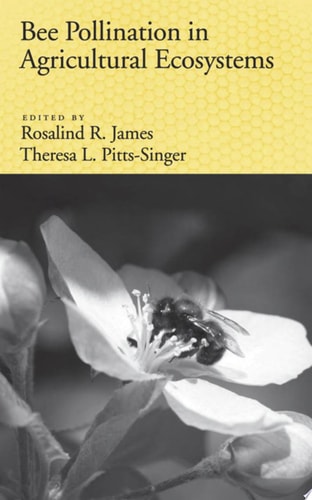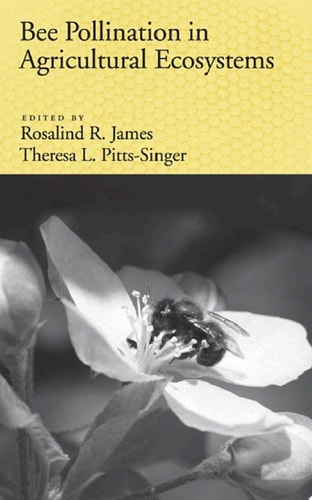
Bee Pollination in Agricultural Ecosystems
0
0
As an Amazon Associate and affiliate partner, Menrva Books earns from qualifying purchases. Learn more
Author Description
For many agricultural crops, bees play a vital role as pollinators, and this book discusses the interplay among bees, agriculture, and the environment. Although honey bees are well recognized as pollinators, managed bumble bees and solitary bees are also critical for the successful pollination of certain crops, while wild bees provide a free service. As bees liberally pass pollen from one plant to the next, they also impact the broader ecosystem, and not always to the benefit of humankind. Bees can enhance the unintentional spread of genes from genetically engineered plants, and may increase the spread of invasive weeds. Conversely, genetically engineered plants can impact pollinators, and invasive weeds can supply new sources of food for these insects. Bees' flower-visiting activities also can be exploited to help spread biological control agents that control crop pests, and they are important for native plant reproduction. Managing bees for pollination is complex and the factors that must be taken into consideration are treated here, including bee natural history, physiology, pathology, and behavior. Furthermore, transporting bees from native ranges to new areas for pollination services can be controversial, and needs to be done only after assuring that it will not disrupt various ecosystems. Even though bees are small, unobtrusive creatures, they play large roles in the ecosystem. The connection between bees and humankind also is symbolic of a broader interconnection between humans and the natural world.
Menrva's Summary
THE THESIS
This book investigates the complex ecological and agricultural interactions between bee populations and human-managed crop systems. Editors Rosalind James and Theresa L. Pitts-Singer compile research from various experts to analyze how managed and wild bees influence crop success, gene flow, and biological pest control. The text provides a framework for understanding the biological and environmental variables necessary for sustainable pollination management.
THE SCOPE MAP
What You Will Find
- Analysis of bee natural history, physiology, pathology, and behavior
- Examination of the risks associated with transporting bee species to non-native ranges
- Discussion on the role of bees in the spread of genetically engineered plant genes and invasive weeds
- Evaluation of using bees as vectors for biological control agents
Scope Limits
- Does not provide a comprehensive guide for amateur beekeeping
- Does not focus on the economic market dynamics of commercial pollination services
THE AUTHORITY PERSPECTIVE
Experts recognize this volume as a technical resource for agricultural scientists and ecologists interested in the intersection of insect biology and crop production. Readers frequently note the academic density of the prose, which serves as a foundational reference for understanding the multifaceted role of bees in modern agricultural ecosystems.
Page Count:
246
Publication Date:
2008-01-01
Publisher:
Oxford University Press
ISBN-10:
0190295554
ISBN-13:
9780190295554
Biology
Zoology
Bees
Pollination
Introduction to Horticulture
Trades & Technology
Entomology
Horticulture
Insect control
Ecology
Agriculture