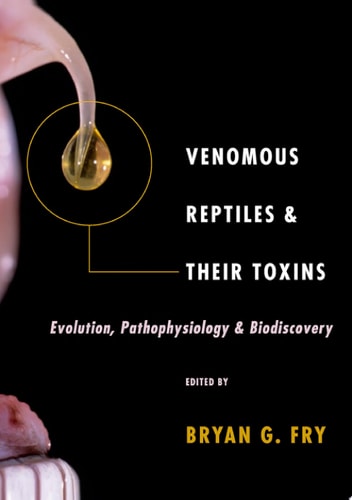
Venomous Reptiles and Their Toxins: Evolution, Pathophysiology and Biodiscovery
0
0
As an Amazon Associate and affiliate partner, Menrva Books earns from qualifying purchases. Learn more
Author Description
Venom research and technology has advanced greatly, rapidly transforming our knowledge of reptile venoms. Research advances, like the development of molecular systematics, provide the framework necessary to reconstruct the evolutionary history of glands and fangs. Such research developments have expanded our understanding of venom's evolution and its usefulness in therapeutic development. The results of this punctuated toxin molecular evolutionary expansion include protein neofunctionalization. While these changes may impact antivenom efficacy, this molecular diversity also facilitates their usefulness in the development of novel drug therapies.Venomous Reptiles And Their Toxins brings together the world's leading toxinologists in this comprehensive study of the entire scope of reptile venoms, from clinical effects to evolution to drug design and development. The book contains detailed applied chapters on clinical care of the envenomed patient, ineffective traditional or modern remedies, occupational considerations involved in the maintenance of institutional venomous reptile collections, veterinary care for venomous reptiles and research methods used in venom research. This book also devotes a chapter to each toxin class found in reptile venoms, detailing the full trajectory of research on the peptide or protein in question. These chapters discuss each toxin's respective role in the envenomation process through to how each has been explored for their biomedical potential. This book is a unique resource for anyone working with venomous reptiles.
Menrva's Summary
THE THESIS
This text investigates the evolutionary origins, physiological mechanisms, and biomedical applications of reptile venoms within the context of modern toxinological research. Edited by Bryan Fry, the book synthesizes contributions from global experts to provide a framework for understanding how molecular evolution drives toxin diversity and how this diversity informs clinical practice and pharmaceutical innovation.
THE SCOPE MAP
What You Will Find
- Evolutionary history of venom glands and fangs using molecular systematics
- Detailed analysis of specific toxin classes and their protein neofunctionalization
- Clinical protocols for envenomation management and veterinary care for captive reptiles
- Methodologies for institutional maintenance and research-based drug discovery
Scope Limits
- Does not provide an exhaustive field guide for the identification of all venomous reptile species
- Excludes non-reptilian venom systems except where necessary for comparative analysis
THE AUTHORITY PERSPECTIVE
Experts recognize this volume as a comprehensive reference for professionals working in toxinology and clinical herpetology. Readers frequently note the technical density of the prose, which serves as a foundational resource for researchers and medical practitioners alike.
Page Count:
576
Publication Date:
2015-01-01
Publisher:
Oxford University Press
ISBN-10:
0190297581
ISBN-13:
9780190297589
Science
Toxicology
Zoology
Herpetology
Biology
Allied Health
Reptiles
Medical
Medicine
Pharmacology
Community Tags
Similar Books