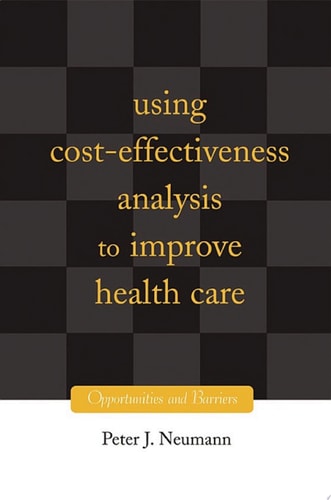
Using Cost-Effectiveness Analysis to Improve Health Care: Opportunities and Barriers
0
0
As an Amazon Associate and affiliate partner, Menrva Books earns from qualifying purchases. Learn more
Author Description
As health costs in the U.S. soar past $1.5 trillion, much evidence indicates that the nation does not get good value for its money. It is widely agreed that we could do better by using cost-effective analysis (CEA) to help determine which health care services are most worthwhile. American policy makers, however, have largely avoided using CEA, and researchers have devoted little attention to understanding why this is so. By considering the economic, social, legal, and ethical factors that contribute to the situation, and how they can be negotiated in the future, this book offers a unique perspective. It traces the roots of EA in health and medicine, describes its promise for rational resource allocation, and discusses the nature of the opposition to it, using Medicare and the Oregon health plans as examples. In exploring the disconnection between the promise of CEA and the persistent failure of rational intentions, the book seeks to find common ground and practical solutions. It analyzes the prospects for change and presents a roadmap for getting there. It offers pragmatic advice for cost-effectiveness analysts, discussing ways in which they can better translate their research findings into the basis for action. The book also offers advice for policy makers and politicians, including lessons from Europe, Canada, and Australia, and underlines the need for leadership to establish the conditions for change.
Menrva's Summary
THE THESIS
This book investigates why cost-effectiveness analysis (CEA) remains underutilized in American health policy despite its potential to improve resource allocation and value. Peter J. Neumann, a researcher in health policy, examines the economic, social, legal, and ethical barriers preventing the integration of CEA into the U.S. healthcare system. By synthesizing historical data and comparative international models, the author argues for a more rational approach to medical spending and provides a strategic framework for bridging the gap between research findings and policy implementation.
THE SCOPE MAP
What You Will Find
- Historical analysis of the development of CEA in medicine
- Case studies of Medicare and the Oregon health plans
- Comparative policy lessons from Europe, Canada, and Australia
- Practical strategies for analysts to improve the translation of research into policy
Scope Limits
- Does not provide a comprehensive clinical guide to performing specific cost-effectiveness calculations
- Does not focus on private insurance internal pricing models beyond their relation to public policy
THE AUTHORITY PERSPECTIVE
Experts recognize this work as a foundational text for understanding the political and institutional resistance to evidence-based health economics in the United States. Readers frequently note that the prose is accessible to both policy professionals and academics, providing a clear roadmap for future reform.
Page Count:
223
Publication Date:
2004-01-01
Publisher:
Oxford University Press
ISBN-10:
0190291419
ISBN-13:
9780190291419
Economics
Health Policy
Public Health
Cost effectiveness
Medical Ethics
Medical care
Allied Health
Medical
Healthcare Administration
Community Tags
Other Editions(2)
Similar Books