Documents of Native American Political Development: 1500s to 1933
0
0
As an Amazon Associate and affiliate partner, Menrva Books earns from qualifying purchases. Learn more
Author Description
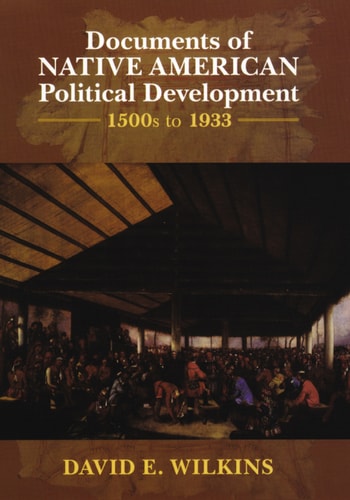
The arrival of European and Euro-American colonizers in the Americas brought not only physical attacks against Native American tribes, but also further attacks against the sovereignty of these Indian nations. Though the violent tales of the Trail of Tears, Black Hawk's War, and the Battle of Little Big Horn are taught far and wide, the political structure and development of Native American tribes, and the effect of American domination on Native American sovereignty, have been greatly neglected. This book contains a variety of primary source and other documents--traditional accounts, tribal constitutions, legal codes, business councils, rules and regulations, BIA agents reports, congressional discourse, intertribal compacts--written both by Natives from many different nations and some non-Natives, that reflect how indigenous peoples continued to exercise a significant measure of self-determination long after it was presumed to have been lost, surrendered, or vanquished. The documents are arranged chronologically, and Wilkins provides brief, introductory essays to each document, placing them within the proper context. Each introduction is followed by a brief list of suggestions for further reading.Covering a fascinating and relatively unknown period in Native American history, from the earliest examples of indigenous political writings to the formal constitutions crafted just before the American intervention of the Indian Reorganization Act of 1934, this anthology will be an invaluable resource for scholars and students of the political development of indigenous peoples the world over.
Menrva's Summary
THE THESIS
This volume investigates the evolution of Native American political structures and the persistent exercise of tribal sovereignty despite centuries of external colonial pressure. David E. Wilkins, a scholar of indigenous politics, compiles a comprehensive collection of primary source materials to challenge the narrative that indigenous self-determination vanished under American domination. By analyzing tribal constitutions, legal codes, and intertribal compacts, the author demonstrates how indigenous nations maintained political agency from the 1500s through 1933.
THE SCOPE MAP
What You Will Find
- A chronological anthology of primary source documents including tribal constitutions, legal codes, and BIA reports.
- Contextual introductory essays for each document provided by the author.
- Bibliographic suggestions for further reading following each entry.
Scope Limits
- The collection concludes at 1933, excluding the subsequent impacts of the Indian Reorganization Act of 1934 and modern political developments.
THE AUTHORITY PERSPECTIVE
Scholars and students of indigenous history identify this work as a foundational reference for understanding the legal and political history of Native American nations. The text is frequently cited for its ability to synthesize diverse primary sources into a coherent narrative of political resilience.
Page Count:
560
Publication Date:
2009-01-01
Publisher:
Oxford University Press
ISBN-10:
0190296232
ISBN-13:
9780190296230
History
Ethnic Studies
Government relations
Primary Sources
Native American
History of the Americas
North America
Law
Constitutions
Community Tags
Similar Books