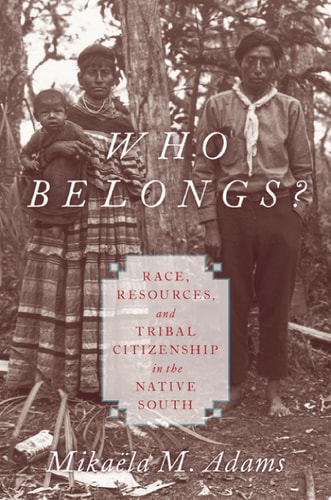
Who Belongs?: Race, Resources, And Tribal Citizenship In The Native South
0
0
As an Amazon Associate and affiliate partner, Menrva Books earns from qualifying purchases. Learn more
Author Description
The Right To Determine Tribal Citizenship Is Fundamental To The Exercise Of Tribal Sovereignty. Deciding Who Belongs To Indian Tribes Has A Complicated History, However, Especially In The South. Indians Who Remained In The South Following Removal Became A Marginalized And Anomalous People In An Emerging Biracial World. Despite The Economic Hardships And Assimilationist Pressures They Faced, They Insisted On Their Political Identity As Citizens Of Tribal Nations And Rejected Euro-american Efforts To Turn Them Into Another Racial Minority. Drawing Upon Their Cultural Traditions, Kinship Patterns, And Evolving Needs To Protect Their Land, Resources, And Identity From Outsiders, Southern Indians Constructed Tribally-specific Citizenship Criteria That Went Beyond The Dominant Society’s Racial Definitions Of “indian.” This Book Addresses How Six Southern Tribes—the Pamunkey Indian Tribe Of Virginia, The Catawba Indian Nation Of South Carolina, The Mississippi Band Of Choctaw Indians, The Eastern Band Of Cherokee Indians Of North Carolina, The Seminole Tribe Of Florida, And The Miccosukee Tribe Of Indians Of Florida—decided Who Belonged. By Focusing On The Rights And Resources At Stake, The Effects Of State And Federal Recognition, The Influence Of Kinship Systems And Racial Ideologies, And The Process Of Creating Official Tribal Rolls, This Book Historicizes Belonging And Reveals How Indians Established Legal Identities. The Varying Experiences Of These Six Tribes Belie The Notion Of An Essential “indian” And Show That Citizenship In A Tribe Is A Historically-constructed And Constantly-evolving Process.
Menrva's Summary
THE THESIS
How do Native American nations in the South define citizenship and sovereignty in the face of external racial pressures and federal recognition policies? Historian Mikaëla M. Adams examines how six specific tribes navigated the tension between Euro-American racial categorization and their own internal political identities. By analyzing the intersection of kinship, land rights, and resource management, the author argues that tribal citizenship is a dynamic, historically constructed process rather than a static racial designation.
THE SCOPE MAP
What You Will Find
- Comparative analysis of six Southern tribes: Pamunkey, Catawba, Mississippi Band of Choctaw, Eastern Band of Cherokee, Seminole, and Miccosukee.
- Examination of the transition from fluid kinship-based membership to fixed, state-sanctioned tribal rolls.
- Analysis of how federal and state recognition policies influenced internal tribal governance.
- Use of primary source documentation, including tribal records, legal filings, and historical census data.
Scope Limits
- The study is geographically restricted to the American South and does not provide a comprehensive survey of tribal citizenship policies across the entire United States.
- The text focuses primarily on the post-removal era and does not provide an exhaustive pre-colonial history of these nations.
THE AUTHORITY PERSPECTIVE
Scholars and historians recognize this work as a significant contribution to the study of Indigenous sovereignty and the complexities of racial identity in the American South. Readers frequently note the academic rigor and the clarity with which the author navigates the intersection of legal history and cultural anthropology.
Page Count:
336
Publication Date:
2016-01-01
Publisher:
Oxford University Press,
ISBN-10:
0190619473
ISBN-13:
9780190619473
History
Southern States
North America
American South
American History
History of the Americas
Federally recognized Indian tribes
Native American
Government relations
Sociology
Professional Career & Trade
Community Tags
Similar Books