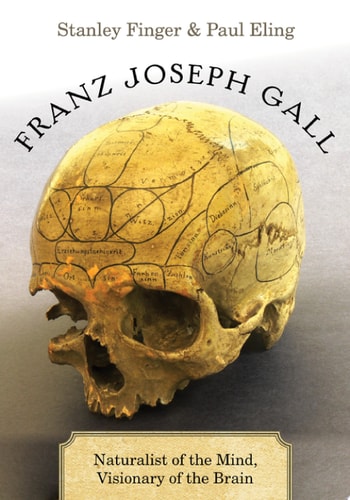
Franz Joseph Gall: Naturalist of the Mind, Visionary of the Brain
0
0
As an Amazon Associate and affiliate partner, Menrva Books earns from qualifying purchases. Learn more
Author Description
Franz Joseph Gall (1758-1828) was always a controversial figure, as was his doctrine, later called phrenology. Although often portrayed as a discredited buffoon, who believed he could assess a person's strengths and weaknesses by measuring cranial bumps, he was, in fact, a serious physician-scientist, who strove to answer timely questions about the mind, brain, and behavior. In many ways a remarkable visionary, his seminal ideas would become tenets of modern behavioral neuroscience. Among other things, he was the first scientist to promote publicly the idea of specialized cortical areas for diverse higher functions, while taking metaphysics out of his new science of mind. Moreover, although he obviously placed too much emphasis on "tell-tale" skull features (mistakenly believing that the cranium faithfully reflects the features of underlying brain areas), he fully understood the strength of "convergent operations," conducting neuroanatomical, developmental, cross-species, gender-comparison, and brain-damage studies on both humans and animals in his attempts to unravel the mysteries of brain organization. Rather than looking upon Gall's "organology" as one of science's great mistakes, this book provides a fresh look at the man and his doctrine. The authors delve into his motives, what was known about the brain during the 1790s, and the cultural demands of his time. Gall is rightfully presented as an early-19th-century biologist, anthropologist, philosopher, and physician with an inquisitive mind and a challenging agenda--namely, how to account for species and individual differences in behavior. In this well-researched book, readers learn why, starting as a young physician in Vienna and continuing his life's work in Paris, he chose to study the mind and the brain, why he employed his various methods, why he relied so heavily on cranial features, and why he wrote what he did in his books. Frequently using Gall's own words, they show his impact in various domains, inclu
Menrva's Summary
THE THESIS
This book investigates the historical legacy of Franz Joseph Gall, challenging the common perception of him as a discredited pseudoscientist by re-evaluating his contributions to modern neuroscience. Authors Paul Eling and Stanley Finger, both experts in the history of psychology and neuroscience, utilize primary source materials and Gall's own writings to contextualize his work within the 18th and 19th-century scientific landscape. They argue that despite the flaws of phrenology, Gall's methodology and his foundational hypothesis regarding cortical localization represent a significant, albeit misunderstood, advancement in the study of the brain.
THE SCOPE MAP
What You Will Find
- A detailed examination of Gall's neuroanatomical and developmental research methods.
- Analysis of the 1790s scientific climate and the cultural pressures influencing Gall's work.
- Comparative studies involving cross-species, gender-based, and brain-damage observations.
Scope Limits
- The text does not provide a comprehensive history of the entire phrenology movement after Gall's death.
- It does not attempt to validate the accuracy of cranial bump measurement as a diagnostic tool.
THE AUTHORITY PERSPECTIVE
Experts in the history of medicine recognize this work as a necessary corrective to the simplified caricature of Gall often found in introductory textbooks. Readers frequently note the academic rigor of the research, which successfully balances historical context with an objective assessment of Gall's scientific impact.
Page Count:
578
Publication Date:
2019-01-01
Publisher:
Oxford University Press
ISBN-10:
0190853808
ISBN-13:
9780190853808
Psychology
Biography
History
MEDICAL History
Medical
Personality
Allied Health
Neuroscience
Phrenology
Science History
Community Tags
Similar Books







Reader Comments
Share Your Thoughts
No comments yet. Be the first to share your thoughts!