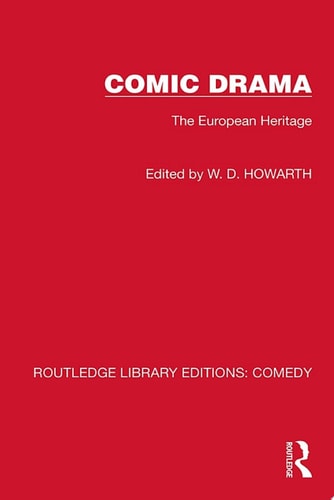
Comic Drama
0
0
As an Amazon Associate and affiliate partner, Menrva Books earns from qualifying purchases. Learn more
Author Description
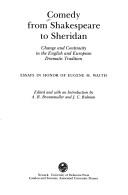
Ever since comedies were first performed in the ancient world, the definition of the term ‘comedy’ has been debated by both playwrights and critics. Originally published in 1978, this volume does not attempt a precise definition, but reviews the various interpretations that have been put forward through the ages, taking as evidence important theoretical writings as well as the plays themselves, and pointing out not only common features but also notable exceptions. The comic drama of Western Europe since the Renaissance is here surveyed in a series of chapters devoted principally to the tradition of European comedy as it developed in the major national literatures. The perspective is expanded to include, on the one hand, the origins in classical Greece and Rome and, on the other, the influence of cinema, radio and television comedy at the time – American as well as European. A structural basis for the volume as a whole is provided in an analytical introduction, where the essential problems are defined: such issues as the relationship between comedy and satire, comedy and farce; the distinction between laughter and smile; the respective claims of realism and fantasy; the role of plot and of dialogue; the place of sentiment and of moral teaching; and the possibility of comic catharsis. In this way the nature and evolution of European comedy is presented in an original and coherent form, not only offering an invaluable aid to students seeking guidance in literature of which they are not making a specialist study, but stimulating the more experienced reader to think again about familiar plays.
Menrva's Summary
THE THESIS
This volume investigates the multifaceted nature and historical evolution of European comedy, from its ancient origins to contemporary media. The book examines various interpretations of 'comedy' through the ages, drawing on theoretical writings and dramatic works to highlight commonalities and exceptions. It surveys the comic drama of Western Europe since the Renaissance, focusing on major national literatures, and expands the perspective to include classical roots and the influence of modern media like cinema, radio, and television. An analytical introduction defines essential problems, such as the relationship between comedy and satire, laughter and smiles, realism and fantasy, and the possibility of comic catharsis, presenting an original and coherent view of European comedy.
THE SCOPE MAP
- Exploration of the historical debate surrounding the definition of 'comedy'.
- Analysis of theoretical writings and plays from ancient Greece and Rome to the Renaissance.
- Survey of European comedy across major national literatures.
- Inclusion of the influence of cinema, radio, and television comedy.
- Discussion of the relationship between comedy and satire, and comedy and farce.
- Examination of the distinction between laughter and smiles.
- Consideration of realism versus fantasy in comic drama.
- Analysis of the role of plot, dialogue, sentiment, and moral teaching in comedy.
THE AUTHORITY PERSPECTIVE
Originally published in 1978, this volume offers a comprehensive survey of European comedy, tracing its development and theoretical underpinnings. The book aims to provide guidance for students and stimulate experienced readers by presenting an original and coherent framework for understanding the nature and evolution of comic drama. Its approach integrates historical analysis with an examination of contemporary media influences, making it a valuable resource for those studying literature and performance. The work is structured to define essential problems within the study of comedy, fostering a deeper appreciation of its diverse forms and functions.
Page Count:
206
Publication Date:
2022-04-26
Publisher:
Taylor & Francis
ISBN-10:
1000579212
ISBN-13:
9781000579215
History
Drama
Non-Fiction
Media Studies
European
Theater History
Literary Criticism