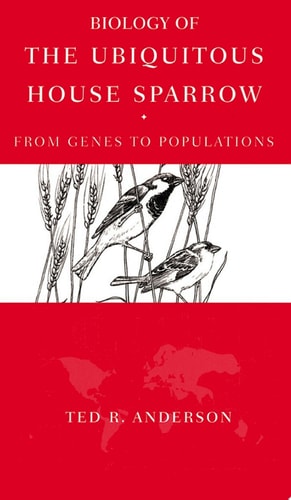
Biology of the Ubiquitous House Sparrow: From Genes to Populations
0
0
As an Amazon Associate and affiliate partner, Menrva Books earns from qualifying purchases. Learn more
Author Description
After the chicken, the House Sparrow is the most widely distributed bird species in the world, occurring on all continents except Antarctica and on most human-inhabited islands. Although its Latin name is Passer domesticus, it is certainly not domesticated. In fact, it is widely regarded as a pest species and is consequently not protected in most of its extensive range. This combination of ubiquity and minimal legal protection has contributed to its wide use in studies by avian biologists throughout the world. The purpose of this book is to review and summarize the results of these global studies on House Sparrows, and to provide a springboard for future studies on the species. House Sparrows have been used to study natural selection in introduced species, circadian rhythms, and the neuroendocrine control of the avian annual cycle. One current question of considerable interest concerns the catastrophic House Sparrow population declines in several urban centers in Europe. Is the House Sparrow a contemporary canary in the mine? Other topics of broad interest include the reproductive and flock-foraging strategies of sparrows, and sexual selection and the function of the male badge in the species. Anderson also explores the role of the House Sparrow in disease transmission to humans and their domesticated animals.
Menrva's Summary
THE THESIS
This text investigates the biological, ecological, and behavioral characteristics of the House Sparrow to understand its global success and recent population fluctuations. Ted R. Anderson, an expert in avian biology, synthesizes decades of international research to provide a comprehensive overview of Passer domesticus. The book argues that the species' ubiquity and lack of legal protection make it a critical model organism for studying evolutionary biology, neuroendocrinology, and urban ecology.
THE SCOPE MAP
What You Will Find
- Analysis of natural selection in introduced populations
- Examination of circadian rhythms and neuroendocrine control
- Review of reproductive and flock-foraging strategies
- Investigation into sexual selection and male badge function
- Assessment of the species' role in disease transmission
Scope Limits
- Does not provide a field guide for identification
- Does not focus on captive breeding or pet care
THE AUTHORITY PERSPECTIVE
Experts recognize this work as a foundational synthesis of avian research regarding a highly adaptable species. Readers frequently note the academic density of the prose, which serves as a primary reference for biologists and ecologists studying urban wildlife dynamics.
Page Count:
559
Publication Date:
2006-01-01
Publisher:
Oxford University Press
ISBN-10:
019029390X
ISBN-13:
9780190293901
Science
Ornithology
Ecology
Zoology
Sparrows
Biology
Community Tags
Similar Books