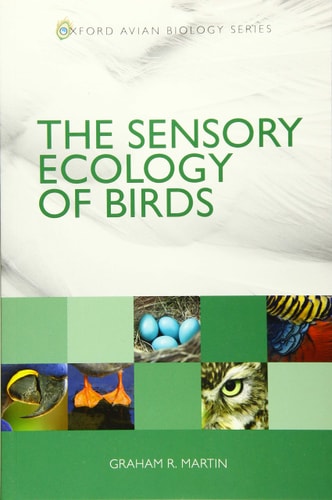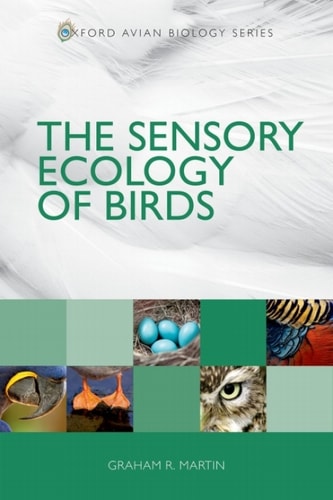
The Sensory Ecology of Birds
0
0
As an Amazon Associate and affiliate partner, Menrva Books earns from qualifying purchases. Learn more
Author Description
Birds are renowned for their exceptional vision and the way that this enables them to survive and navigate the world in such a unique way. However, it is now recognised that avian behaviour is guided by information drawn from many different senses which are then used in integrated and complementary ways to answer the many different sensory challenges posed by specific environments and particular tasks. Understanding how sensory information is used by birds has important applications in conservation, such as providing vital insights into why birds are prone to collisions with structures like power lines and wind turbines, and why so many diving birds become entrapped in nets. A sensory ecology approach suggests how these problems can be mitigated. The Sensory Ecology of Birds ranges widely across species, environments, and behaviours to present a synthesis that challenges previous assumptions about the information that controls the behaviour of birds. A bird may use a wide range and combination of sensory information that comes from sight, hearing, smell, mechanoreception, taste, and magnetoreception. It may also include specific refinements of senses, such as echolocation and remote touch from the bill. The book recognises that there are many complex and subtle trade-offs and complementarities of information between different types of sensory information. This accessible text will be of interest to a wide ornithological readership, from undergraduates to researchers as well as a broader audience of behavioural ecologists and evolutionary biologists.
Menrva's Summary
THE THESIS
This book investigates how birds integrate multiple sensory inputs to navigate their environments and perform specific survival tasks. Graham R. Martin, an expert in avian sensory systems, synthesizes current research to argue that avian behavior is not dominated by vision alone, but by a complex, complementary interplay of sight, hearing, smell, mechanoreception, taste, and magnetoreception. The text provides a framework for understanding these sensory trade-offs and applies these findings to practical conservation challenges, such as reducing avian mortality from human-made structures.
THE SCOPE MAP
What You Will Find
- Analysis of sensory modalities including echolocation and remote touch
- Application of sensory ecology to conservation issues like power line and turbine collisions
- Synthesis of cross-species behavioral data and environmental interactions
Scope Limits
- Does not provide a comprehensive field guide for bird identification
- Does not focus on the evolutionary history of avian anatomy beyond sensory function
THE AUTHORITY PERSPECTIVE
Experts recognize this work as a significant synthesis of avian sensory biology that bridges the gap between theoretical ecology and applied conservation. Readers frequently note the academic density of the prose, which serves as a valuable resource for both undergraduate students and professional researchers in the field.
Page Count:
320
Publication Date:
2017-01-01
Publisher:
OUP Oxford
ISBN-10:
0192520547
ISBN-13:
9780192520548
Science
Ecology
Ornithology
Biology
Zoology