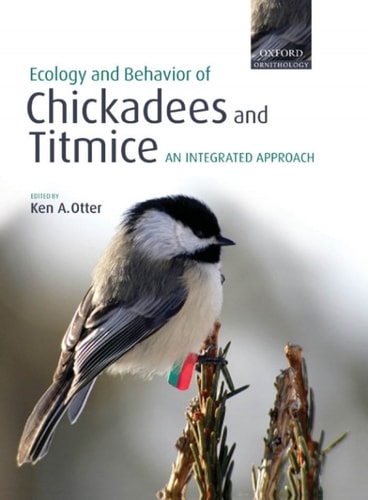
Ecology and Behavior of Chickadees and Titmice: An Integrated Approach
0
0
As an Amazon Associate and affiliate partner, Menrva Books earns from qualifying purchases. Learn more
Author Description
Chickadees and titmice are among the most popular birds in North America, due in large part to their readiness to use bird feeders, to nest in urban gardens, and even to be trained to take food from people's hands. These attributes have also made them (and their Eurasian tit counterparts) perhaps the most intensively studied bird family in the world. Long-term research in Europe has yielded some of the most comprehensive data on the impact of global warming on the breeding ecology of birds. Chickadees have amongst the best-studied and most complex vocal behaviour of any bird species, displaying one of the closest analogies to human sentence structure in the animal kingdom in their familiar chick-a-dee call. The social dominance hierarchies commonly witnessed in the form of squabbling at winter feeders are some of most stable and closely studied, and have huge impacts on controlling the lives of these small birds. Their food-storing behavior, and the brain and physiological mechanisms controlling this, has contributed significantly to our wider understanding of spatial orientation. In recent years, these birds have also been used as model species for investigating topics as diverse as inter-species hybridization, the impacts of forest fragmentation and complex systems of communication. In short, chickadees and titmice have contributed enormously to our understanding of a myriad of topics in ecology, behavior and psychology. This book brings together a range of experts from across North America who utilise chickadees or titmice as study organisms. Each chapter reviews the latest advances in evolution and behavioral research that have been accomplished through the study of North American Parids, and compares and contrasts this literature with research on their Eurasian counterparts as well as other avian families. This research level text is aimed at professional avian biologists and ornithologists as well as graduate students of avian behavioral ecology and evolution.
Menrva's Summary
THE THESIS
This volume investigates the ecological and behavioral significance of North American chickadees and titmice as model organisms for broader biological research. Edited by Ken A. Otter, the text compiles contributions from leading avian biologists to synthesize current knowledge on Parid evolution, communication, and social structure. The work frames these species as essential subjects for understanding complex systems, ranging from vocal syntax to the physiological mechanisms of spatial memory.
THE SCOPE MAP
What You Will Find
- Comparative analyses between North American Parids and Eurasian tit species.
- Research on vocal communication, social dominance hierarchies, and food-storing behaviors.
- Data on the impacts of environmental stressors such as forest fragmentation and global warming.
Scope Limits
- The text focuses primarily on North American species and their Eurasian counterparts, excluding broader global avian families.
- The content is tailored for professional and academic audiences, omitting introductory material for casual birdwatchers.
THE AUTHORITY PERSPECTIVE
Experts identify this volume as a comprehensive reference for graduate-level study in avian behavioral ecology. Readers frequently note the academic density of the prose, which serves as a foundational resource for researchers specializing in ornithology and evolutionary biology.
Page Count:
344
Publication Date:
2007-01-01
Publisher:
OUP Oxford
ISBN-10:
0191524603
ISBN-13:
9780191524608
Science
Ecology
Zoology
Biology
Ornithology
Community Tags
Similar Books