John Buridan
0
0
As an Amazon Associate and affiliate partner, Menrva Books earns from qualifying purchases. Learn more
Author Description
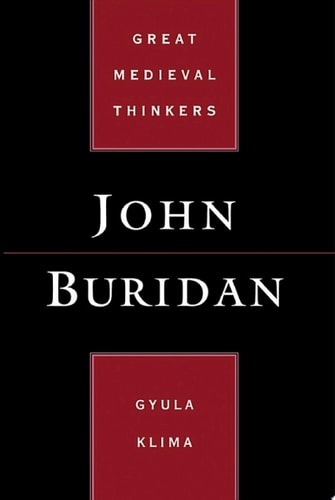
John Buridan (ca. 1300-1362) has worked out perhaps the most comprehensive account of nominalism in the history of Western thought, the philosophical doctrine according to which the only universals in reality are "names": the common terms of our language and the common concepts of our minds. But these items are universal only in their signification; they are singular entities like any other in reality. This book examines what is most intriguing to contemporary readers in Buridan's medieval philosophical system: his nominalist account of the relationship between language, thought and reality. The main focus of the discussion is Buridan's deployment of the Ockhamist conception of a "mental language" for mapping the complex structures of written and spoken human languages onto a parsimoniously construed reality. Concerning these linguistic structures, this book carefully analyzes Buridan's conception of the radical conventionality of written and spoken languages, in contrast to the natural semantic features of concepts. The discussion pays special attention to Buridan's token-based semantics of terms and propositions, his conception of existential import, ontological commitment, truth, and logical validity. Finally, the book presents a detailed discussion of how these logical devices allow Buridan to maintain his nominalist position without giving up Aristotelian essentialism or yielding to skepticism, and pays special attention to contemporary concerns with these issues.
Menrva's Summary
THE THESIS
How does John Buridan’s nominalist framework reconcile the relationship between language, mental concepts, and objective reality? Gyula Klima, a specialist in medieval philosophy, utilizes Buridan’s 14th-century texts to reconstruct a coherent system of nominalism. The author argues that Buridan’s deployment of a 'mental language' allows for a rigorous mapping of linguistic structures onto a parsimonious reality without abandoning Aristotelian essentialism.
THE SCOPE MAP
What You Will Find
- Analysis of Buridan’s token-based semantics of terms and propositions
- Examination of the Ockhamist conception of mental language
- Discussion of existential import, ontological commitment, and logical validity
- Synthesis of medieval nominalism with contemporary philosophical concerns
Scope Limits
- Does not provide a comprehensive biography of Buridan’s life outside his philosophical contributions
- Does not cover the full breadth of 14th-century scholasticism beyond Buridan’s specific nominalist school
THE AUTHORITY PERSPECTIVE
Scholars recognize this work as a definitive analysis of Buridan’s semantic theory and its implications for modern logic. Readers frequently note the academic density of the prose, which requires a foundational understanding of scholastic terminology to fully grasp the author's arguments.
Page Count:
366
Publication Date:
2008-01-01
Publisher:
Oxford University Press
ISBN-10:
019029194X
ISBN-13:
9780190291945
Philosophy
History
Religion
Philosophy history
Logic
Semantics
European History
Nominalism
Community Tags
Other Editions(3)
Similar Books