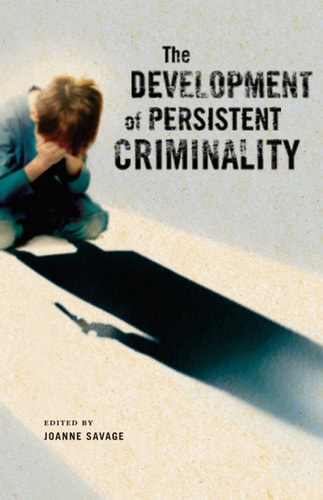
Development of Persistent Criminality
0
0
As an Amazon Associate and affiliate partner, Menrva Books earns from qualifying purchases. Learn more
Author Description
The Development of Persistent Criminality addresses one of the most pressing problems of modern criminology: Why do some individuals become chronic, persistent offenders? Because chronic offenders are responsible for the majority of serious crimes committed, understanding which individuals will become chronic offenders is an important step in helping us develop interventions. This volume bridges the gap between the criminological literature, which has recently focused on the existence of various criminal trajectories, and the developmental psychology literature, which has focused on risk factors for conduct problems and delinquency. In it, chapters by some of the most widely published authors in this area unite to contribute to a knowledge base which will be the next major milestone in the field of criminology. The authors of this volume represent a unique gathering of international, interdisciplinary social problem so that we can prevent the enormous human and economic costs associated with serious crimes, these authors share their insights and findings on topics such as families and parenting, poverty, stressful life events, social support, biology and genetics, early onset, foster care, educational programs for juvenile offenders, deterrence, and chronic offending among females. Significant attention is paid throughout to longitudinal studies of offending. Several authors also share new theoretical approaches to understanding persistence and chronicity in offending, including an expansion of the conceptualization of the etiology of self-control, a discussion of offender resistance to social control, a dynamic developmental systems approach to understanding offending in young adulthood, and the application of Wikström's situational action theory to persistent offending.
Menrva's Summary
THE THESIS
This volume investigates the developmental and environmental factors that contribute to the emergence and maintenance of chronic, persistent criminal behavior in individuals. Edited by Joanne Savage, this collection synthesizes research from criminology and developmental psychology to identify why a small subset of offenders accounts for the majority of serious crime. The contributors utilize longitudinal data and interdisciplinary theoretical frameworks to examine how risk factors—ranging from biological predispositions to socioeconomic stressors—interact over the life course to solidify criminal trajectories.
THE SCOPE MAP
What You Will Find
- Longitudinal studies tracking the progression of offending from childhood to young adulthood.
- Theoretical applications including situational action theory and dynamic developmental systems.
- Analyses of diverse risk factors such as family dynamics, poverty, genetics, and foster care experiences.
- Evaluations of intervention strategies and deterrence mechanisms for juvenile and adult offenders.
Scope Limits
- The text does not provide a comprehensive legal analysis of criminal sentencing guidelines.
- It does not offer a clinical manual for individual psychological treatment or therapy.
THE AUTHORITY PERSPECTIVE
Experts recognize this volume as a significant interdisciplinary resource that effectively bridges the gap between sociological criminology and developmental psychology. Readers frequently note the academic density of the prose, which makes it a specialized text intended for researchers, graduate students, and policy professionals in the criminal justice field.
Page Count:
559
Publication Date:
2009-01-01
Publisher:
Oxford University Press
ISBN-10:
0190295007
ISBN-13:
9780190295004
Psychology
Developmental Psychology
Family & Consumer Sciences
Social Science
Criminology
Personality
Professional Career & Trade
Sociology
Community Tags
Similar Books