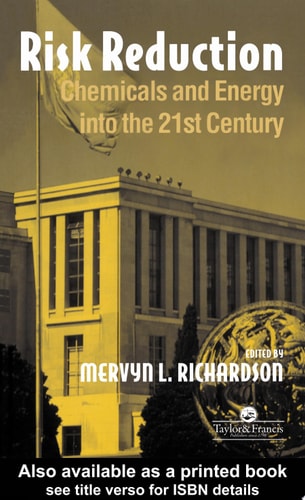
Risk Reduction
0
0
As an Amazon Associate and affiliate partner, Menrva Books earns from qualifying purchases. Learn more
Author Description
Concerned with the need to reduce chemical risks, this text also covers related biological and physical risks. Risk reduction has an important economic role, not least in developing countries. Many of the contributors are from develping countries and indicate the problems and some of the solutions their countries will need to adopt during their process of reconstruction, development and recovery. The text discusses the decision-making process involving the political, socioeconomic, engineering, and natural sciences so as to develop, analyze and compare regulatory options. It considers how such measured decision making enables the selection of optimal responses to achieve safety from perceived hazards.
Menrva's Summary
THE THESIS
This text investigates the multifaceted decision-making processes required to mitigate chemical, biological, and physical risks within the context of global economic development. Mervyn Richardson compiles contributions from international experts, particularly those from developing nations, to examine how regulatory frameworks can be structured to balance safety with socioeconomic recovery. The work argues that effective risk reduction requires an integrated approach that synthesizes political, engineering, and scientific data to select optimal safety responses.
THE SCOPE MAP
What You Will Find
- Analysis of chemical, biological, and physical hazard mitigation strategies.
- Economic frameworks for risk reduction in developing nations.
- Methodologies for comparing regulatory options across political and scientific sectors.
- Case studies on reconstruction and recovery processes following environmental or industrial hazards.
THE AUTHORITY PERSPECTIVE
Experts identify this text as a practical resource for policymakers and engineers tasked with navigating complex regulatory environments. Readers frequently note the technical focus on the intersection of socioeconomic development and safety management.
Page Count:
612
Publication Date:
1996-01-01
Publisher:
Taylor & Francis, Inc.
ISBN-10:
0203482913
ISBN-13:
9780203482919
Science
Economics
Engineering
Public Policy
Community Tags
Similar Books