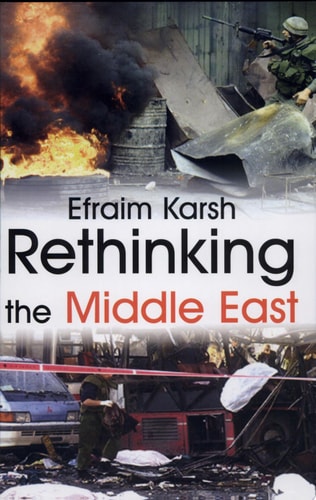
Rethinking the Middle East
0
0
As an Amazon Associate and affiliate partner, Menrva Books earns from qualifying purchases. Learn more
Author Description
"Rethinking the Middle East runs counter to the received wisdom in modern Middle East Studies. This discipline has been dominated by what may be termed a culture of victimisation; it views the local populations of the Middle East - Arabs in particular - as the hapless victims of alien encroachment, and blames the region's endemic malaise on Western political and cultural imperialism." "Professor Efraim Karsh contends that the influence of the Great Powers has not been the primary force behind the region's political development, nor the main cause of its famous volatility. He argues that the main impetus has been provided by regional factors; and that - even at their weakest point in modern history, during the final stages of the Ottoman Empire - the peoples in the Middle East have played an active role in the restructuring of their region."--Jacket.
Menrva's Summary
THE THESIS
Efraim Karsh investigates whether the political volatility of the Middle East is primarily a product of Western imperialism or internal regional dynamics. Drawing on his extensive background in Middle Eastern history and political science, Karsh challenges the prevailing academic consensus that characterizes regional populations as passive victims of external powers. He presents a framework that emphasizes the agency of local actors, arguing that internal political and cultural factors have been the primary drivers of the region's development since the decline of the Ottoman Empire.
THE SCOPE MAP
What You Will Find
- Historical analysis of the final stages of the Ottoman Empire and its collapse.
- A critique of the 'culture of victimization' prevalent in modern Middle East studies.
- Examination of regional political agency versus external Great Power influence.
- Evidence derived from historical political restructuring and regional power struggles.
THE AUTHORITY PERSPECTIVE
Experts often cite this work as a provocative counter-narrative to mainstream academic discourse on Middle Eastern history. Readers frequently note the author's assertive prose and his willingness to challenge established scholarly paradigms.
Page Count:
208
Publication Date:
2003-01-01
Publisher:
Taylor & Francis Group
ISBN-10:
0203497864
ISBN-13:
9780203497869
Western
History
International relations
Community Tags
Other Editions(3)
Similar Books