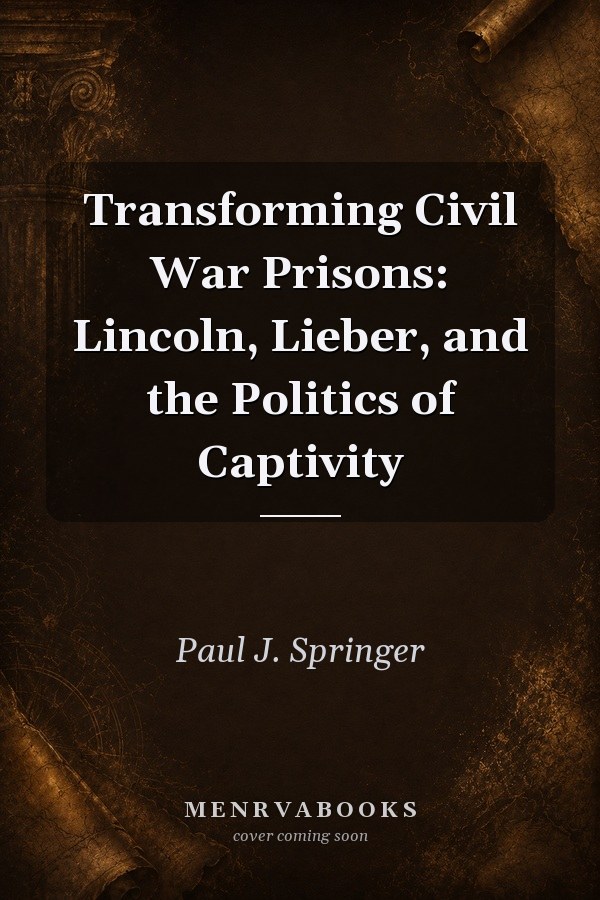
Transforming Civil War Prisons: Lincoln, Lieber, and the Politics of Captivity
0
0
As an Amazon Associate and affiliate partner, Menrva Books earns from qualifying purchases. Learn more
Author Description
During The Civil War, 410,000 People Were Held As Prisoners Of War On Both Sides. With Resources Strained By The Unprecedented Number Of Prisoners, Conditions In Overcrowded Prison Camps Were Dismal, And The Death Toll Across Confederate And Union Prisons Reached 56,000 By The End Of The War. In An Attempt To Improve Prison Conditions, President Lincoln Issued General Orders 100, Which Would Become The Basis For Future Attempts To Define The Rights Of Prisoners, Including The Geneva Conventions. Meanwhile, Stories Of Horrific Prison Experiences Fueled Political Agendas On Both Sides, And Would Define The Memory Of The War, As Each Region Worked Aggressively To Defend Its Prison Record And To Honor Its Own Pows. Robins And Springer Examine The Experience, Culture, And Politics Of Captivity, Including War Crimes, Disease, And The Use Of Former Prison Sites As Locations Of Historical Memory. Transforming Civil War Prisons Introduces Students To An Underappreciated Yet Crucial Aspect Of Waging War And Shows How The Legacy Of Civil War Prisons Remains With Us Today-- Prisoner Of War Policy And Practice -- The Captivity Experience -- The Culture Of Captivity -- The Politics Of Captivity -- Honoring Civil War Captives -- Civil War Prisons In History And Memory. Paul J. Springer And Glenn Robins. Includes Bibliographical References And Index.
Menrva's Summary
THE THESIS
This work investigates how the management of Civil War prisoners of war catalyzed the development of international humanitarian law and shaped the political memory of the conflict. Authors Glenn Robins and Paul J. Springer utilize historical records and administrative documents to analyze the intersection of wartime policy, prisoner treatment, and the subsequent efforts to codify the rights of captives. By examining the implementation of General Orders 100, the authors argue that the crisis of captivity during the American Civil War served as a foundational moment for modern prisoner-of-war standards, including the Geneva Conventions. The text provides a comprehensive framework for understanding how the logistical failures of the era influenced both contemporary military policy and long-term historical narratives.
THE SCOPE MAP
What You Will Find
- Analysis of General Orders 100 and its influence on international humanitarian law.
- Examination of the logistical and health challenges within Union and Confederate prison camps.
- Discussion of the political exploitation of prison narratives in post-war regional memory.
- Evaluation of the evolution of prisoner-of-war policy and the cultural significance of former prison sites.
THE AUTHORITY PERSPECTIVE
Experts identify this text as a significant contribution to the study of Civil War administrative history and the evolution of military ethics. Readers frequently note the clarity with which the authors connect 19th-century prison conditions to the development of modern international legal frameworks.
Page Count:
0
Publication Date:
2014-01-01
Publisher:
Taylor & Francis Group
ISBN-10:
020349458X
ISBN-13:
9780203494585
History
War
Military History
Prison Studies
Prisoners of War
Civil War
Prisons
Community Tags
Similar Books