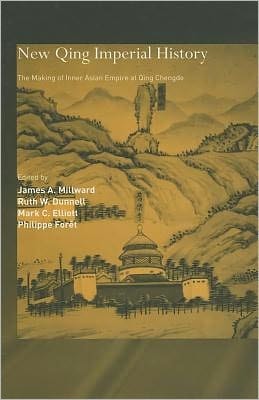
New Qing Imperial History: The Making of Inner Asian Empire at Qing Chengde
0
0
As an Amazon Associate and affiliate partner, Menrva Books earns from qualifying purchases. Learn more
Author Description
Well-known authors use the Manchu summer capital of Chengde and associated architecture, art and ritual activity as the focus for an exploration of the importance of Inner Asia and Tibet to the Qing Empire (1636-1911).
Menrva's Summary
THE THESIS
This work investigates how the Manchu summer capital of Chengde served as a critical nexus for the expansion and consolidation of the Qing Empire's authority over Inner Asia and Tibet. The authors, a team of distinguished historians and scholars, utilize a multidisciplinary approach that integrates architectural analysis, art history, and ritual studies to challenge traditional Sinocentric interpretations of Qing governance. By focusing on the specific site of Chengde, the text argues that the Qing state was a multi-ethnic, Inner Asian empire that derived its legitimacy through complex cultural and religious negotiations with its frontier territories.
THE SCOPE MAP
What You Will Find
- Detailed analysis of the Qing dynasty's administrative and cultural expansion between 1636 and 1911.
- Examination of the architectural symbolism and ritual functions of the Chengde summer retreat.
- Integration of primary source materials, including Manchu, Tibetan, and Chinese imperial records.
- Exploration of the geopolitical relationship between the Qing court and the diverse populations of Inner Asia.
THE AUTHORITY PERSPECTIVE
Scholars frequently cite this volume as a foundational text for understanding the 'New Qing History' school of thought and its emphasis on the empire's Inner Asian dimensions. Readers often note the academic density of the prose, which provides a rigorous examination of imperial statecraft through material culture.
Page Count:
0
Publication Date:
2004-01-01
Publisher:
Taylor & Francis Group
ISBN-10:
0203630939
ISBN-13:
9780203630938
Architecture
History
Art History
Asian History
China
Imperial History
Community Tags
Similar Books