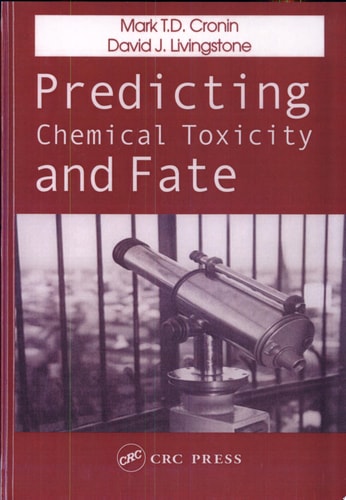
Predicting Chemical Toxicity And Fate
0
0
As an Amazon Associate and affiliate partner, Menrva Books earns from qualifying purchases. Learn more
Author Description
Quantitative Structure-activity Relationships (qsars) Are Increasingly Used To Predict The Harmful Effects Of Chemicals To Humans And The Environment. The Increased Use Of These Methods In A Variety Of Areas (academic, Industrial, Regulatory) Results From A Realization That Very Little Toxicological Or Fate Data Is Available On The Vast Amount Of Chemicals To Which Humans And The Environment Are Exposed.predicting Chemical Toxicity And Fate Provides A Comprehensive Explanation Of The State-of-the-art Methods That Are Available To Predict The Effects Of Chemicals On Humans And The Envir Front Cover; Dedications; Table Of Contents; Contributors; Foreword; Preface; Acknowledgments; List Of Abbreviations; Section 1; Introduction; Chapter 1; Section 2; Methodology; Section 3; Qsars For Human Health Endpoints; Section 4; Qsars For Environmental Toxicity And Fate; Section 5; Application; Index; B; C; D; E; F; G; H; I; J; K; L; M; N; O; P; Q; R; S; T; V; W; Z [edited By] Mark T.d. Cronin And David J. Livingstone. Description Based Upon Print Version Of Record. Includes Bibliographical References And Index. English
Menrva's Summary
THE THESIS
This text investigates the efficacy and application of Quantitative Structure-Activity Relationships (QSARs) as a predictive tool for assessing the toxicological impact of chemicals on human health and the environment. Edited by Mark T.D. Cronin and David J. Livingstone, the book synthesizes current methodologies used by academic, industrial, and regulatory bodies to address the significant data gaps regarding chemical exposure. It provides a structured framework for understanding how molecular structure correlates with biological activity and environmental persistence.
THE SCOPE MAP
What You Will Find
- Comprehensive overview of QSAR methodologies and modeling techniques.
- Analysis of human health endpoints including mutagenicity, carcinogenicity, and systemic toxicity.
- Evaluation of environmental fate, including bioaccumulation, persistence, and aquatic toxicity.
- Practical applications for regulatory compliance and industrial chemical safety assessment.
THE AUTHORITY PERSPECTIVE
Experts recognize this volume as a foundational reference for toxicologists and environmental scientists working with predictive modeling. Readers frequently note the technical density of the prose, which is tailored for professionals and researchers in the field of chemical safety.
Page Count:
474
Publication Date:
2004-01-01
Publisher:
Taylor & Francis Group
ISBN-10:
0203642627
ISBN-13:
9780203642627
Science
Toxicology
Structure-Activity Relationship
Chemistry
Reference
Toxicity
Methods
Toxicological Chemistry
Medical
Pharmacologic Actions
Community Tags
Similar Books