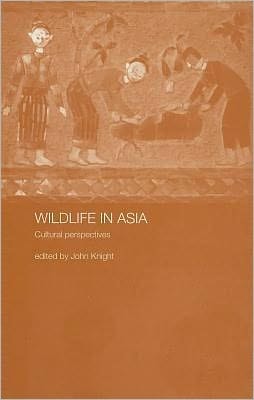
Wildlife in Asia: Cultural Perspectives
0
0
As an Amazon Associate and affiliate partner, Menrva Books earns from qualifying purchases. Learn more
Author Description
Drawing on anthropological and historical data, this book examines human-wildlife relations in China, Tibet, Japan, Bhutan, Indonesia, the Philippines, Malaysia, India, Thailand and Vietnam. The volume initially focuses on the various ways in which wild animals are exploited as a resource, for food, medicine and crop-picking labour, before examining animals termed as pests or predators that are deemed to be harmful and dangerous. Bringing together anthropologists and historians, this book analyses the range, variability and historical mutability of human sensibilities towards animals in Asia and will be of interest to Asianists and anthropologists alike.
Menrva's Summary
THE THESIS
This volume investigates the complex, multifaceted relationship between human societies and wildlife across diverse Asian cultures. Author John B. Knight, alongside a collection of anthropologists and historians, utilizes cross-cultural data to analyze how human sensibilities toward animals shift based on economic, historical, and social contexts. The work argues that human-wildlife interactions are not static but are instead shaped by evolving perceptions of utility, danger, and cultural value.
THE SCOPE MAP
What You Will Find
- Comparative analysis of human-wildlife relations across China, Tibet, Japan, Bhutan, Indonesia, the Philippines, Malaysia, India, Thailand, and Vietnam.
- Examination of animals categorized as economic resources for food, medicine, and labor.
- Analysis of the social construction of animals labeled as pests or predators.
- Historical and anthropological frameworks for understanding human sensibilities toward non-human species.
THE AUTHORITY PERSPECTIVE
Experts identify this text as a significant contribution to the field of environmental anthropology and Asian studies. Scholars frequently note the academic rigor of the case studies provided, making it a valuable resource for researchers examining the intersection of human culture and ecological management.
Page Count:
272
Publication Date:
2004-01-01
Publisher:
Taylor & Francis Group
ISBN-10:
0203641817
ISBN-13:
9780203641811
Nature
History
Natural history
Anthropology
Human Relationships
Sociology
Asian Studies
Wildlife conservation
Community Tags
Similar Books