Spinoff 2005
0
0
As an Amazon Associate and affiliate partner, Menrva Books earns from qualifying purchases. Learn more
Author Description
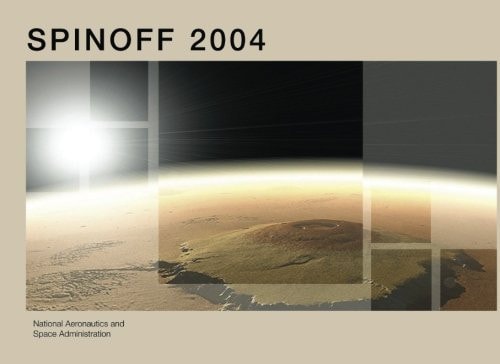
On January 14, 2004, President George W. Bush announced the Vision for Space Exploration, giving the National Aeronautics and Space Administration (NASA) a new and historic focus and clear objectives. The fundamental goal of the Vision is "...to advance U.S. scientific, security, and economic interests through a robust space exploration program." In issuing this directive, the President committed the Nation to return human explorers to the Moon by the end of the next decade, and to prepare for the exploration of Mars that will follow. NASA is now working hard to develop a new generation of spacecraft and space launch vehicles that will enable the achievement of these goals within the modest expenditure of tax revenues-on average, $55 per year for every American citizen-that our Nation invests in space exploration and research. Indeed, throughout the Agency's history, technologies developed to advance our exploration missions have boosted economic progress and benefited millions of people here on Earth. Spinoff 2005 highlights NASA's work, consistent with our Agency's charter, to "research, develop, verify, and transfer advanced aeronautics, space, and related technologies." Among the beneficial NASA-derived technologies featured in Spinoff 2005 now utilized in the commercial and public sector are: * a bacterial spore-detection unit designed to sterilize Mars-bound spacecraft that can also recognize anthrax and other spore-forming bacteria. * a remote command and control system NASA uses to run experiments on the International Space Station that allows people to use a cell phone, personal digital assistant (PDA), or Internet connection to activate their kitchen appliances and begin cooking dinner before they get home. * space suit technology used in the production of lighter-than-air vehicles, such as blimps and dirigibles, during pharmaceutical manufacturing and the production of gas masks for military and civilian use. * a prototype of the Mars Exploration
Menrva's Summary
THE THESIS
The National Aeronautics and Space Administration (NASA) details technological advancements derived from its space exploration initiatives. The book highlights innovations stemming from the Vision for Space Exploration, announced in 2004, which set objectives for returning humans to the Moon and preparing for Mars exploration. It showcases how NASA's research and development in spacecraft and launch vehicles translate into practical applications benefiting Earth. The publication emphasizes NASA's charter to transfer advanced technologies to the commercial and public sectors, underscoring the economic and societal benefits of space programs.
THE SCOPE MAP
- Bacterial spore-detection units for sterilizing spacecraft, also capable of recognizing anthrax.
- Remote command and control systems used on the International Space Station, adapted for domestic appliance control.
- Space suit technology applied to lighter-than-air vehicles, pharmaceutical manufacturing, and gas mask production.
- Prototypes related to Mars exploration missions.
- Technologies developed to advance exploration missions and boost economic progress.
- Examples of NASA-derived technologies utilized in the commercial and public sectors.
THE AUTHORITY PERSPECTIVE
Spinoff 2005 serves as a testament to NASA's commitment to technological transfer, showcasing innovations that have tangible benefits on Earth. The publication details specific examples of how advancements in space exploration, driven by initiatives like the Vision for Space Exploration, have led to practical applications in fields ranging from public health to consumer technology. It underscores the agency's role in fostering economic progress and improving the lives of citizens through its research and development efforts. The book highlights the dual purpose of space exploration: pushing the boundaries of human knowledge and simultaneously generating technologies that serve terrestrial needs.
Page Count:
160
Publication Date:
2013-12-24
Publisher:
CreateSpace Independent Publishing Platform
ISBN-10:
1494788497
ISBN-13:
9781494788490
Science & Technology
Science
Non-Fiction
Innovation
Aerospace
Technology
Community Tags
Similar Books