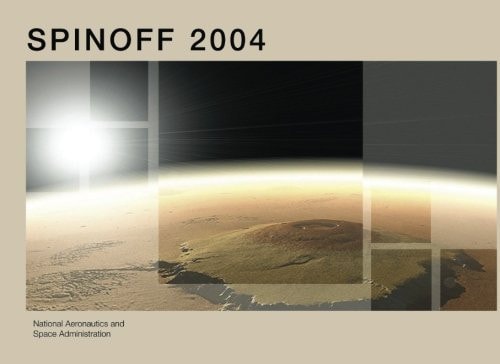
Spinoff 2004
0
0
As an Amazon Associate and affiliate partner, Menrva Books earns from qualifying purchases. Learn more
Author Description
NASA's commitment to advancing and sharing technology dates back to the very origin of the Agency. After the dawn of aviation emerged with the Wright brothers' historic flight in 1903, Congress established the National Advisory Committee for Aeronautics in 1915 "to supervise and direct the scientific study of the problems of flight, with a view to their solution." When the committee was transformed into NASA by the National Aeronautics and Space Act of 1958, it was tasked with sharing its vast body of scientific and technical knowledge to benefit mankind. Today, NASA continues to fulfill the 1915 Congressional directive and 1958 Space Act by reaching milestones in space exploration through a variety of programs. The technical expertise gained from these programs has transferred into the U.S. economy and society via academia, industry, and other Federal agencies, ensuring America stays capable and competitive. The Innovative Partnerships Program of NASA's Exploration Systems Mission Directorate was established to guarantee the transfer of the Space Program's technical advances. Brimming with examples of technologies that have led to significant improvements in quality of life, NASA's technology transfer program has been the conduit for these achievements. The program excels by maintaining established relationships with commercial industries that include and extend beyond the aerospace sector. Spinoff 2004 highlights the diverse benefits that have grown from NASA's partnerships with U.S. companies. These products span the many disciplines of our society. Included among this year's achievements are a natural, low-calorie sugar that is safe for diabetics and contact lenses that offer the benefits of a laser-corrective eye procedure without the need for surgery. This issue also showcases some of the many research and development activities being conducted by NASA's field centers. These activities continue to fuel the Agency's missions, which collectively contribute to ma
Menrva's Summary
THE THESIS
NASA's enduring commitment to technological advancement and dissemination is explored through its historical and ongoing contributions to society. The agency, originating from the National Advisory Committee for Aeronautics established in 1915, was tasked upon its transformation into NASA in 1958 with sharing its scientific and technical knowledge for the benefit of humankind. This mandate continues through various programs, with the Innovative Partnerships Program specifically designed to facilitate the transfer of space program advances into the U.S. economy and society. Spinoff 2004 showcases these diverse benefits, highlighting technologies that have improved quality of life and maintained American competitiveness.
THE SCOPE MAP
- Historical overview of NASA's technology transfer mission since its inception.
- Examples of technologies transferred to industry and society, including advancements in health and consumer products.
- Showcase of research and development activities at NASA's field centers.
- Focus on partnerships with U.S. companies across various sectors.
- Specific examples of innovations such as a diabetic-safe sugar substitute and advanced contact lenses.
- Discussion of how NASA's technical expertise contributes to economic and societal competitiveness.
THE AUTHORITY PERSPECTIVE
This publication serves as a testament to NASA's successful technology transfer initiatives, providing concrete examples of how space exploration research benefits everyday life. It highlights the agency's role in fostering innovation and maintaining economic competitiveness through strategic partnerships. The content demonstrates the tangible outcomes of NASA's R&D efforts, showcasing advancements that improve quality of life across various societal domains.
Page Count:
128
Publication Date:
2013-12-24
Publisher:
CreateSpace Independent Publishing Platform
ISBN-10:
1494788330
ISBN-13:
9781494788339
Non-Fiction
Science
Science & Technology
Technology
Aerospace
Innovation
Community Tags
Other Editions(2)

Similar Books


Reader Comments
Share Your Thoughts
No comments yet. Be the first to share your thoughts!