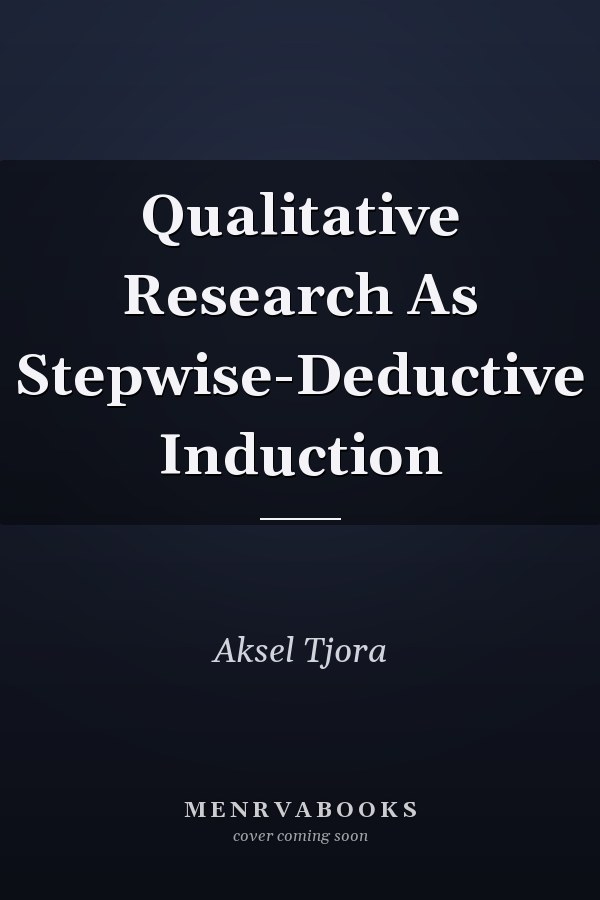
Qualitative Research as Stepwise-Deductive Induction
0
0
As an Amazon Associate and affiliate partner, Menrva Books earns from qualifying purchases. Learn more
Author Description
This Book Provides Thorough Guidance On Various Forms Of Data Generation And Analysis, Presenting A Model For The Research Process In Which Detailed Data Analysis And Generalization Through The Development Of Concepts Are Central. Based On An Inductive Principle, Which Begins With Raw Data And Moves Towards Concepts Or Theories Through Incremental Deductive Feedback Loops, The 'stepwise-deductive Induction' Approach Advanced By The Author Focuses On The Analysis Phase In Research. Concentrating On Creativity, Structuring Of Analytical Work, And Collaborative Development Of Generic Knowledge, It Seeks To Enable Researchers To Extend Their Insight Of A Subject Area Without Having Personally To Study All The Data Generated Throughout A Project. A Constructive Alternative To Grounded Theory, The Approach Advanced Here Is Centred On Qualitative Research That Aims At Developing Concepts, Models, Or Theories On Basis Of A Gradual Paradigm To Reduce Complexity. As Such, It Will Appeal To Scholars And Students Across The Social Sciences With Interests In Methods And The Analysis Of Qualitative Data Of Various Kinds.
Menrva's Summary
THE THESIS
This book investigates the methodological framework of stepwise-deductive induction as a systematic approach to qualitative data analysis and theory development. Aksel Tjora, an experienced scholar in social science methodology, presents a structured model that bridges the gap between raw empirical data and conceptual generalization. By utilizing incremental deductive feedback loops, the author provides a practical alternative to traditional grounded theory, emphasizing the reduction of complexity through creative analytical structuring. The text serves as a guide for researchers aiming to generate generic knowledge while maintaining rigorous standards of inquiry.
THE SCOPE MAP
What You Will Find
- A detailed model for the qualitative research process centered on stepwise-deductive induction.
- Methodologies for data generation and the creative structuring of analytical work.
- Techniques for collaborative knowledge development and conceptual generalization.
- A comparative framework positioning the approach against established grounded theory practices.
THE AUTHORITY PERSPECTIVE
Scholars and students in the social sciences frequently cite this work as a practical resource for refining qualitative analysis techniques. Experts highlight the text for its clear articulation of a structured, iterative process that assists researchers in managing complex data sets effectively.
Page Count:
172
Publication Date:
2018-01-01
Publisher:
Routledge
ISBN-10:
0203730070
ISBN-13:
9780203730072
Sociology
Qualitative Research
Academic writing
Research Methods