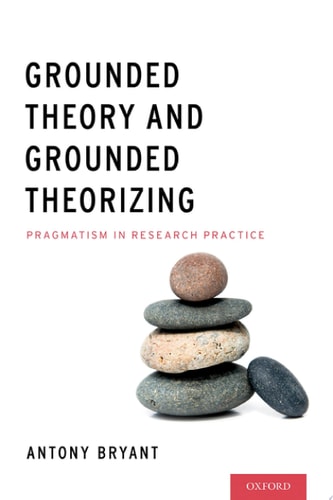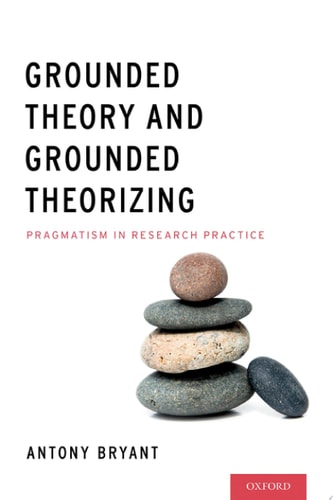
Grounded Theory and Grounded Theorizing: Pragmatism in Research Practice
0
0
As an Amazon Associate and affiliate partner, Menrva Books earns from qualifying purchases. Learn more
Author Description
The grounded theory method is founded on a view of analysis whereby the research questions and potential hypotheses are not articulated at the outset; rather, the researcher initially seeks to gain familiarity with a research context, and only in later stages does the process become progressively more focused and targeted. As such, the grounded theory method uses familiar research tools and techniques (coding, sampling, classification) but in distinctive and innovative ways. As a result, the method is one of the most widely used-if not the most widely used-method in current qualitative research. Initially aimed at the social sciences, the grounded theory method has now spread so far that it can be found in almost any subject area or discipline in which people are observed or interviewed as participants. In Grounded Theory and Grounded Theorizing: Pragmatism in Research Practice, author Antony Bryant illustrates the key features of grounded theory method by showcasing examples from several of his most successful doctoral students. In this accessible volume, Bryant provides expert guidance on the use of grounded theory method in qualitative research by emphasizing and illustrating the essential features and background of the method for readers and researchers of all levels and competencies.
Menrva's Summary
THE THESIS
This book investigates the practical application and philosophical foundations of grounded theory within contemporary qualitative research. Antony Bryant, a scholar in research methodology, draws upon his extensive experience supervising doctoral research to bridge the gap between abstract pragmatist philosophy and the concrete execution of grounded theory. He argues that the method's strength lies in its iterative, emergent nature, which allows researchers to develop hypotheses from data rather than imposing them prematurely. The text serves as a guide for navigating the complexities of coding, sampling, and classification in diverse disciplinary contexts.
THE SCOPE MAP
What You Will Find
- A detailed examination of the pragmatist roots of grounded theory.
- Practical guidance on coding, theoretical sampling, and data classification techniques.
- Illustrative case studies derived from successful doctoral research projects.
Scope Limits
- The text does not provide an exhaustive history of all qualitative methodologies.
- It does not focus on quantitative statistical analysis or mixed-methods research designs.
THE AUTHORITY PERSPECTIVE
Experts recognize this work as a bridge between high-level philosophical inquiry and the day-to-day requirements of graduate-level research. Readers frequently note that the inclusion of student examples makes the methodology accessible to those new to the field while maintaining enough rigor for experienced practitioners.
Page Count:
432
Publication Date:
2016-01-01
Publisher:
Oxford University Press
ISBN-10:
0190652527
ISBN-13:
9780190652524
Qualitative Research
Research Methods
Sociology
Academic writing
Pragmatism
Social Science
Community Tags
Similar Books