Leadership in a Small Town
0
0
As an Amazon Associate and affiliate partner, Menrva Books earns from qualifying purchases. Learn more
Author Description
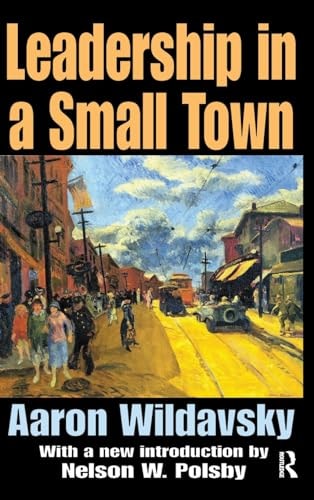
Of all the questions that might be asked about political life, it would be difficult to find one of greater interest than the ancient query: who rules over whom? It appeals powerfully to our curiosity. We want to know who "runs" things--who makes policy decisions in New York, Washington, London, or the town in which we live. Is it a single powerful individual, an economic elite, a series of elites, the citizens, political bosses, or some variant of these possibilities?The major purpose of this volume is to find an answer to this question for a small American city, and to extend the answer through relevant theory to American cities in general. But much more precisely, answers are sought for these interrelated questions: What are the relationships between the rulers and the ruled? How are the rulers related to each other? Are the rulers the same for all policies or do they differ from one area of policy to another? How do leaders arise, and in what way are they different from other people?The issues discussed in this volume are familiar to many towns. They range from controversies about the building of a new water system to housing and zoning codes, from charity appeals to low-income housing, from nominations and elections to industrial development and off-street parking. Wildavsky draws parallels to other community studies and formulates general propositions in support of his thesis that American communities are pluralist. And ultimately, Wildavsky is optimistic that small towns foster citizen participation, giving the population more of a chance to direct its own future. Aaron Wildavsky was, until his death in 1993, professor of political science and public policy at the University of California, Berkeley, and, while working on the present study, taught at Oberlin College. Transaction has posthumously published Wildavsky's complete essays and papers in five volumes. Nelson W. Polsby is Heller Professor of Political Science at the University of California, Berkeley.
Menrva's Summary
THE THESIS
This volume investigates the fundamental question of power dynamics in American local government: who actually holds authority and makes policy decisions within a small city? Aaron Wildavsky, a distinguished professor of political science and public policy, utilizes a specific case study of a small American city to test theories of community power. By examining how leaders emerge and interact with the citizenry, he argues that American communities operate under a pluralist framework rather than being controlled by a singular elite.
THE SCOPE MAP
What You Will Find
- Analysis of local policy controversies including water systems, zoning codes, and industrial development.
- Theoretical framework comparing small-town power structures to broader American political systems.
- Examination of the relationships between political leaders and the general population.
- Evaluation of citizen participation and its impact on directing the future of local governance.
THE AUTHORITY PERSPECTIVE
Experts recognize this work as a significant contribution to the study of community power structures and pluralism in the mid-twentieth century. Readers frequently note the academic rigor of the prose, which serves as a foundational text for students of political science and urban sociology.
Page Count:
388
Publication Date:
2017-01-01
Publisher:
Taylor and Francis
ISBN-10:
020378748X
ISBN-13:
9780203787489
Public Policy
American History
Etudes de cas
Urban Studies
Sociology
Community leadership
Power Social sciences
Community Tags
Other Editions(3)

Similar Books

Reader Comments
Share Your Thoughts
No comments yet. Be the first to share your thoughts!