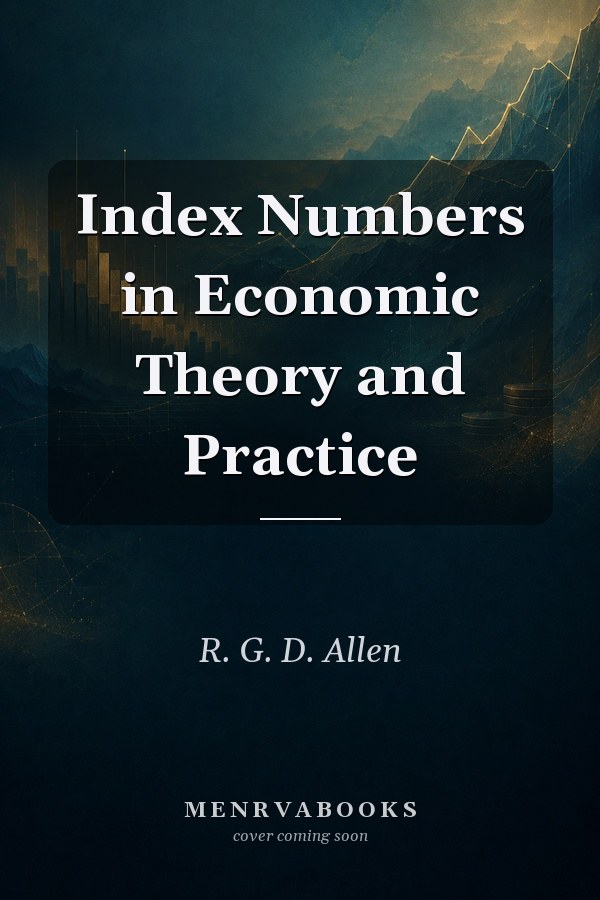
Index Numbers in Economic Theory and Practice
0
0
As an Amazon Associate and affiliate partner, Menrva Books earns from qualifying purchases. Learn more
Author Description
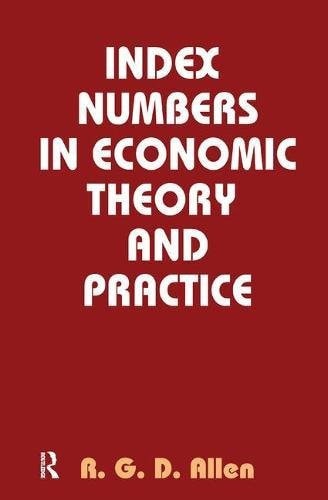
There is no book currently available that gives a comprehensive treatment of the design, construction, and use of index numbers. However, there is a pressing need for one in view of the increasing and more sophisticated employment of index numbers in the whole range of applied economics and specifically in discussions of macroeconomic policy. In this book, R.G.D. Allen meets this need in simple and consistent terms and with comprehensive coverage. The text begins with an elementary survey of the index-number problem before turning to more detailed treatments of the theory and practice of index numbers. The binary case in which one time period is compared with another is first developed and illustrated with numerous examples. This is to prepare the ground for the central part of the text on runs of index numbers. Particular attention is paid both to fixed-weighted and to chain forms as used in a wide range of published index numbers taken mainly from British official sources. This work deals with some further problems in the construction of index numbers, problems which are both troublesome and largely unresolved. These include the use of sampling techniques in index-number design and the theoretical and practical treatment of quality changes. It is also devoted to a number of detailed and specific applications of index-number techniques to problems ranging from national-income accounting, through the measurement of inequality of incomes and international comparisons of real incomes, to the use of index numbers of stock-market prices. Aimed primarily at students of economics, whatever their age and range of interests, this work will also be of use to those who handle index numbers professionally.
Menrva's Summary
THE THESIS
This work addresses the critical need for a comprehensive, accessible framework regarding the design, construction, and practical application of index numbers in modern economic analysis. R.G.D. Allen, a noted economist, synthesizes theoretical foundations with empirical practice to provide a consistent methodology for students and professionals. By bridging the gap between elementary theory and complex macroeconomic policy, the text establishes a standard for evaluating index-number utility in diverse economic contexts.
THE SCOPE MAP
What You Will Find
- Theoretical development of binary comparisons between distinct time periods
- Comparative analysis of fixed-weighted versus chain-linked index forms
- Methodological examination of sampling techniques in index design
- Practical applications including national-income accounting and international real-income comparisons
THE AUTHORITY PERSPECTIVE
Experts recognize this text as a foundational resource for understanding the mechanics of economic indicators. Readers frequently note the clarity of the prose, which makes complex statistical concepts accessible to both academic students and professional practitioners.
Page Count:
288
Publication Date:
2017-01-01
Publisher:
Taylor & Francis Group
ISBN-10:
0203788672
ISBN-13:
9780203788677
Economics
Macroeconomics
Finance
Reference
Statistics
Community Tags
Other Editions(5)



Similar Books











Reader Comments
Share Your Thoughts
No comments yet. Be the first to share your thoughts!