Figures in a Western Landscape
0
0
As an Amazon Associate and affiliate partner, Menrva Books earns from qualifying purchases. Learn more
Author Description
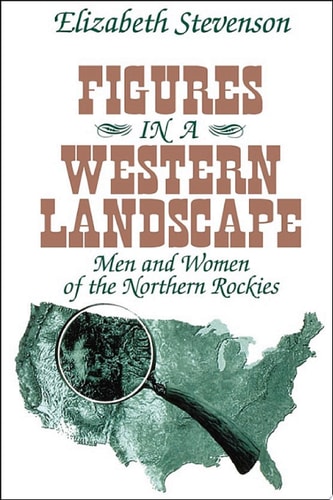
The northern Rocky Mountains and adjacent high plains were the last American West. Here was the final enactment of our national drama - the last explorations, the final battles of the Indian wars, the closing of the frontier. In Figures in a Western Landscape, award-winning biographer Elizabeth Stevenson humanizes the history of the region with a procession of individual lives moving across the generations. Each of the sixteen men and women depicted has left behind his or her own unique written record or oral history. They have bequeathed to us stories that are rich in revealing anecdote and colorful detail. Among them:. Meriwether Lewis, America's "most introspective explorer," whose journals provide the first English-language record of the Northwest's rivers, mountains, and plains - and offer a memorable account of how their newness struck his imagination. John Kirk Townsend, among the first Western explorers who sought neither personal wealth nor fame but the advancement of scientific knowledge. Known to the friendly Chinooks as "the bird chief," he lacked the artistic skills of his contemporary, Audubon, and relied instead on gathering specimens (and was more than once forced by hunger to eat them). James and Granville Stuart, early settlers lured by rumors of gold in the 1850s, who crossed three dangerous rivers on a 150-mile trek through the wilderness because they had heard rumors of an even rarer commodity - books. (They bought five, at the "very stiff" price of five dollars apiece: a volume each of Shakespeare and Byron, a life of Napoleon, a French Bible, and Adam Smith's Wealth of Nations.). Pretty-Shield, wife of the Crow scout who warned Custer to turn back at Little Big Horn, who "hated no one, not even the white man," and who told her story to an astonished interpreter in the 1930s. In a concluding chapter, Stevenson draws on previously unpublished material to reveal new information about Martha Jane Cannary Burke, better known as Calamity Jane,
Menrva's Summary
THE THESIS
This work investigates the human experience of the American frontier by examining the individual lives that shaped the northern Rocky Mountains and high plains. Elizabeth Stevenson, an award-winning biographer, utilizes personal journals, oral histories, and archival records to construct a narrative of the region's development. By focusing on sixteen distinct figures, she argues that the history of the West is best understood through the specific, lived experiences of those who traversed its landscape during the closing of the frontier.
THE SCOPE MAP
What You Will Find
- Biographical accounts of sixteen individuals including Meriwether Lewis, John Kirk Townsend, and Pretty-Shield.
- Historical analysis of the northern Rocky Mountains and high plains during the 19th century.
- Primary source material derived from personal journals, letters, and oral histories.
- New research and previously unpublished information regarding the life of Calamity Jane.
THE AUTHORITY PERSPECTIVE
Critics and historians frequently commend Stevenson for her ability to synthesize disparate primary sources into a cohesive, human-centered narrative. Readers often note the accessible prose style, which balances academic rigor with the storytelling elements of individual biography.
Page Count:
222
Publication Date:
2017-01-01
Publisher:
Taylor & Francis Group
ISBN-10:
0203791916
ISBN-13:
9780203791912
Non-Fiction
History
Biography
American West
Frontier History
Landscapes
West Us
Community Tags
Other Editions(2)
Similar Books


Reader Comments
Share Your Thoughts
No comments yet. Be the first to share your thoughts!