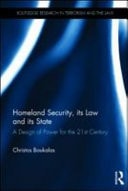
Homeland Security, Its Law and Its State
0
0
As an Amazon Associate and affiliate partner, Menrva Books earns from qualifying purchases. Learn more
Author Description
This Book Assesses The Impact Of Post-9/11 Domestic Counterterrorism Policy On Us Political Life. It Examines Political Discourse, Law, Institutional Architecture, And State-population Relations, And Shows That 'homeland Security' Is A Project With Wide-ranging Implications For Democratic Institutions And Culture. These Implications Are Addressed Through A Novel Approach That Treats Law And The State As Social Relations, And Relates Developments In Law To Those In The State And In Social Dynamics. On This Basis, The Book Examines The New Political Representations In Counterterrorism Discourse, Especially Regarding The Relation Between The State And The Population. It Examines The Form And Content Of Counterterrorism Law, The Powers It Provides, And The Structure And Functions It Prescribes For The State. By Focusing On The New Department Of Homeland Security And The Restructuring Of The Intelligence Apparatus, The Book Assesses The New, Intelligence-led, Policing Model. Finally, It Examines Forms Of Popular Support And Resistance To Homeland Security, To Discuss Citizenship And State-population Relations. The Author Concludes That Homeland Security Has Turned The Us Into A Hybrid Polity; The Legal And Political Institutions Of Democracy Remain Intact, But Their Content And Practices Become Authoritarian And Exclude The Population From Politics. These Legal And Political Forms Remain Operative Beyond Counterterrorism, In The Context Of The Present Economic Crisis. They Are A Permanent Configuration Of Power. This Book Is An Indispensable Companion For Students Of (counter-) Terrorism And Security Studies, Politics, Human Rights, Constitutional And Criminal Law, American Studies, And Criminology. -- Provided By Publisher.
Menrva's Summary
THE THESIS
This book investigates how post-9/11 domestic counterterrorism policies have fundamentally altered the structure and democratic character of the United States political system. Christos Boukalas, a scholar in security studies and political theory, utilizes a framework that treats law and the state as dynamic social relations rather than static entities. By analyzing institutional architecture, legislative changes, and shifting state-population dynamics, the author argues that homeland security has established a permanent, authoritarian configuration of power that persists beyond immediate security threats.
THE SCOPE MAP
What You Will Find
- Analysis of the restructuring of the United States intelligence apparatus and the Department of Homeland Security.
- A theoretical framework examining law and the state as evolving social relations.
- Examination of political discourse and the shifting representation of the relationship between the state and the population.
- Case studies on the intersection of counterterrorism law, economic crisis, and the erosion of democratic participation.
THE AUTHORITY PERSPECTIVE
Scholars in the fields of political science and constitutional law frequently cite this work for its rigorous application of critical theory to contemporary security apparatuses. Experts highlight the text as a significant contribution to understanding the long-term institutional shifts within the American political landscape.
Page Count:
0
Publication Date:
2014-01-01
Publisher:
Taylor & Francis Group
ISBN-10:
0415526310
ISBN-13:
9780203797716
Prevention
Law And Legislation
American Studies
Law
Sociology
Counterterrorism
Criminology
Community Tags
Similar Books