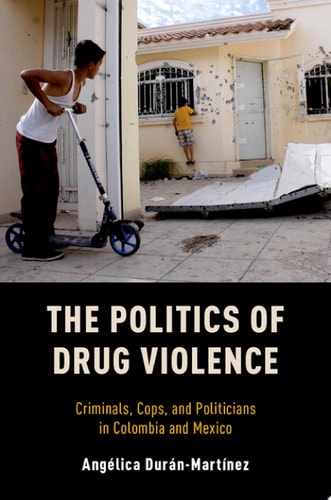
The Politics of Drug Violence
0
0
As an Amazon Associate and affiliate partner, Menrva Books earns from qualifying purchases. Learn more
Author Description
Over The Last Few Decades, Drug Trafficking Organizations In Latin America Became Infamous For Their Shocking Public Crimes, From Narcoterrorist Assaults On The Colombian Political System In The 1980s To The More Recent Wave Of Beheadings In Mexico. However, While These Highly Visible Forms Of Public Violence Dominate Headlines, They Are Neither The Most Common Form Of Drug Violence Nor Simply The Result Of Brutality. Rather, They Stem From Structural Conditions That Vary From Country To Country And From Era To Era. In The Politics Of Drug Violence, Angelica Durán-martínez Shows How Variation In Drug Violence Results From The Complex Relationship Between State Power And Criminal Competition. Drawing On Remarkably Extensive Fieldwork, This Book Compares Five Cities That Have Been Home To Major Trafficking Organizations For The Past Four Decades: Cali And Medellín In Colombia, And Ciudad Juárez, Culiacán, And Tijuana In Mexico. She Shows That Violence Escalates When Trafficking Organizations Compete And The State Security Apparatus Is Fragmented. However, When The Criminal Market Is Monopolized And The State Security Apparatus Cohesive, Violence Tends To Be More Hidden And Less Frequent. The Size Of Drug Profits Does Not Determine Violence Levels, And Neither Does The Degree Of State Weakness. Rather, The Forms And Scale Of Violent Crime Derive Primarily From The Interplay Between Marketplace Competition And State Cohesiveness. An Unprecedentedly Rich Empirical Account Of One Of The Worst Problems Of Our Era, The Book Will Reshape Our Understanding Of The Forces Driving Organized Criminal Violence In Latin America And Elsewhere.
Menrva's Summary
THE THESIS
This book investigates why drug trafficking organizations employ varying levels of public violence across different regions and time periods. Angelica Durán-Martínez, a political scientist, challenges the assumption that violence is merely a byproduct of criminal brutality or state weakness. By analyzing the interplay between criminal market competition and the cohesiveness of state security apparatuses, she argues that structural conditions, rather than profit margins alone, dictate the frequency and visibility of violent acts.
THE SCOPE MAP
What You Will Find
- Comparative analysis of five cities: Cali, Medellín, Ciudad Juárez, Culiacán, and Tijuana.
- A theoretical framework linking state security fragmentation to public criminal violence.
- Extensive empirical data gathered through long-term field research.
Scope Limits
- The study focuses primarily on Latin American contexts and may not account for all variables in other global regions.
- It does not provide a comprehensive history of every drug trafficking organization mentioned.
THE AUTHORITY PERSPECTIVE
Experts recognize this work as a significant contribution to the study of organized crime and state-society relations. Readers frequently note the academic rigor and the depth of the comparative methodology employed throughout the text.
Page Count:
320
Publication Date:
2017-01-01
Publisher:
Oxford University Press
ISBN-10:
0190695978
ISBN-13:
9780190695972
Criminology
Sociology
American Studies
Community Tags
Other Editions(2)

Similar Books