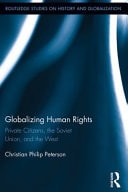
Globalizing Human Rights: Private Citizens, the Soviet Union, and the West
0
0
As an Amazon Associate and affiliate partner, Menrva Books earns from qualifying purchases. Learn more
Author Description
Machine Generated Contents Note: 1. Introduction -- 2. The Human Rights Weapon Emerges: Private Citizens And The U.s. Congress, 1975-1977 -- 3. Setting The Stage For A Superpower Confrontation: Jimmy Carter, The Soviet Union, And Human Rights, 1975-1976 -- 4. The Carter Administration Wields The Human Rights Weapon, January 1977-august 1978 -- 5. The Soviet Government, Private Citizens, And Human Rights, January 1977-august 1978 -- 6.a Delicate Balancing Act Topples: The Carter Administration, Human Rights, And Private Citizens, September 1978-january 1981 -- 7. The Soviet Government, Private Citizens, And Human Rights, September 1978-january 1981 -- 8. The Reagan Administration's Conservative And Private Human Rights Campaign, January 1981-november 1985 -- 9. The Soviet Government And Dissenters: Human Rights, Peace, And Detente, January 1981-september 1986 -- 10. Holding Mikhail Gorbachev And Soviet Bureaucrats Accountable: U.s.-soviet Relations, Human Rights, And The Final Act, December 1985-january 1989 -- 11. Revolutions From Above And Below: Mikhail Gorbachev, Soviet Bureaucrats, And Human Rights -- 12. Conclusion. Christian Philip Peterson. Includes Bibliographical References And Index.
Menrva's Summary
THE THESIS
This book investigates how private citizens and non-governmental actors influenced the integration of human rights into the diplomatic framework of U.S.-Soviet relations during the late Cold War. Christian Philip Peterson, a historian specializing in international relations, utilizes archival research and government records to argue that human rights evolved from a peripheral concern into a central instrument of superpower statecraft. By examining the interplay between grassroots activism and official policy, the text demonstrates how private advocacy groups forced both the Carter and Reagan administrations to confront the Soviet government on internal dissent and civil liberties.
THE SCOPE MAP
What You Will Find
- A detailed chronological analysis of U.S.-Soviet diplomatic relations from 1975 to 1989.
- Examination of the Helsinki Final Act and its role in legitimizing international human rights monitoring.
- Case studies on the interaction between private citizens, NGOs, and the U.S. Congress.
- An assessment of how Mikhail Gorbachev’s internal reforms were shaped by external pressure regarding human rights.
THE AUTHORITY PERSPECTIVE
Experts highlight this work as a significant contribution to the study of transnational activism and its impact on Cold War diplomacy. Readers frequently note the academic density of the prose and the extensive use of primary source documentation to support the author's arguments.
Page Count:
279
Publication Date:
2011-01-01
Publisher:
Routledge
ISBN-10:
0415885116
ISBN-13:
9780203805275
History
Lobbying
International Cooperation
International relations
Human rights
Cold War
Soviet Union
Government Policy
Community Tags
Similar Books