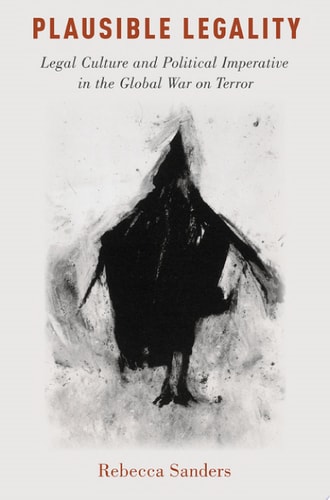
Plausible Legality
0
0
As an Amazon Associate and affiliate partner, Menrva Books earns from qualifying purchases. Learn more
Author Description
In Many Ways, The United States' Post-9/11 Engagement With Legal Rules Is Puzzling. Officials In Both The Bush And Obama Administrations Authorized Numerous Contentious Counterterrorism Policies That Sparked Global Outrage, Yet They Have Repeatedly Insisted That Their Actions Were Lawful And Legitimate. In Plausible Legality, Rebecca Sanders Examines How The Us Government Interpreted, Reinterpreted, And Manipulated Legal Norms And What These Justificatory Practices Imply About The Capacity Of Law To Constrain State Violence. Through Case Studies On The Use Of Torture, Detention, Targeted Killing, And Surveillance, Sanders Provides A Detailed Analysis Of How Policymakers Use Law To Achieve Their Political Objectives And Situates These Patterns Within A Broader Theoretical Understanding Of How Law Operates In Contemporary Politics. She Argues That Legal Culture--defined As Collectively Shared Understandings Of Legal Legitimacy And Appropriate Forms Of Legal Practice In Particular Contexts--plays A Significant Role In Shaping State Practice. In The Global War On Terror, A National Security Culture Of Legal Rationalization Encouraged Authorities To Seek Legal Cover-to Construct The Plausible Legality Of Human Rights Violations-in Order To Ensure Impunity For Wrongdoing. Looking Forward, Law Remains Vulnerable To Evasion And Revision. As Sanders Shows, Despite The Efforts Of Human Rights Advocates To Encourage Deeper Compliance, The Normalization Of Post-9/11 Policy Has Created Space For Future Administrations To Further Erode Legal Norms.
Menrva's Summary
THE THESIS
How does the United States government manipulate legal norms to justify contentious counterterrorism policies while maintaining a facade of legitimacy? Rebecca Sanders, a scholar of political science and international relations, investigates the intersection of state violence and legal interpretation. By analyzing the rhetoric and actions of the Bush and Obama administrations, she argues that a culture of legal rationalization allows policymakers to construct plausible legality for human rights violations. Her framework posits that legal culture—the shared understanding of what constitutes legitimate practice—is frequently weaponized to ensure impunity rather than to constrain state power.
THE SCOPE MAP
What You Will Find
- Analysis of post-9/11 counterterrorism policies including torture, detention, targeted killing, and surveillance.
- A theoretical framework defining legal culture and its role in state practice.
- Examination of the normalization of policy erosion and its implications for future administrations.
Scope Limits
- The text focuses primarily on United States government actions and does not provide an exhaustive global comparative study of all nations' counterterrorism legal frameworks.
THE AUTHORITY PERSPECTIVE
Experts in international relations and legal studies identify this work as a critical examination of how state actors utilize legal language to bypass human rights constraints. Readers often note the academic density of the prose, which provides a rigorous analysis of the intersection between political objectives and legal interpretation.
Page Count:
256
Publication Date:
2018-01-01
Publisher:
Oxford University Press
ISBN-10:
0190870567
ISBN-13:
9780190870560
National security
Human rights
Counterterrorism
Government Policy
International Law
Community Tags
Other Editions(2)
Similar Books