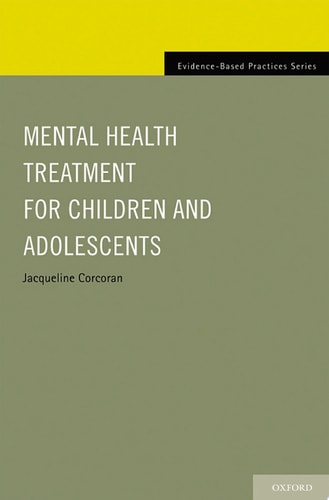
Mental Health Treatment for Children and Adolescents: Evidence-Based Practices
0
0
As an Amazon Associate and affiliate partner, Menrva Books earns from qualifying purchases. Learn more
Author Description
Mental health problems disrupt the lives of many young people and their families, putting them at risk for instability as adults. This is particularly true for children from vulnerable populations, such as those in the child welfare or juvenile justice systems. With the prospect of potentially dire outcomes, it is essential that professionals be well equipped to understand and treat mental health disorders early and effectively. Mental Health Treatment for Children and Adolescents offers a sweeping synthesis of the research on treatment of DSM-defined mental disorders in youth, appraising the state of the available evidence and examining how evidence-based treatments address the biological, psychological, and social variables that contribute to the development of disorders and the potential for recovery. Each chapter focuses on a different diagnosis, covering ADHD, oppositional defiant disorder, conduct disorder, substance use disorders, depressive disorders, eating disorders, anxiety disorders, and post-traumatic stress disorder. Each one contains a critical review of the state of knowledge about a disorder, a summary of empirically supported psychosocial and pharmacological treatments, a case study, and a recommended research agenda. In addition, each is thoroughly grounded in a risk and resilience framework and focuses on the contextual factors that influence not only the development of a disorder but the implementation and adaptation of evidence-based practices in the real world. Mental Health Treatment for Children and Adolescents is a valuable resource for students, researchers, and clinicians both for its presentation of cutting-edge data and its emphasis on implications for social workers in training, practice, and research.
Menrva's Summary
THE THESIS
This text investigates the efficacy of evidence-based interventions for treating DSM-defined mental health disorders in youth populations. Jacqueline Corcoran, a scholar in social work and clinical practice, synthesizes current empirical research to provide a framework for understanding how biological, psychological, and social variables influence disorder development and recovery. The book emphasizes the application of these findings within real-world contexts, specifically targeting the needs of vulnerable populations such as those involved in child welfare or juvenile justice systems.
THE SCOPE MAP
What You Will Find
- Comprehensive reviews of ADHD, oppositional defiant disorder, conduct disorder, substance use, depression, eating disorders, anxiety, and PTSD.
- Integration of a risk and resilience framework for clinical assessment.
- Empirical summaries of both psychosocial and pharmacological treatment modalities.
- Case studies illustrating the practical application of research-based interventions.
Scope Limits
- The text focuses primarily on DSM-defined disorders and may not cover emerging or non-diagnostic mental health concerns.
- It does not provide exhaustive training manuals for specific therapeutic techniques but rather reviews the evidence supporting them.
THE AUTHORITY PERSPECTIVE
Clinicians and students frequently cite this work as a foundational reference for bridging the gap between academic research and clinical practice in pediatric mental health. Experts highlight the book's utility in providing a structured, evidence-based approach for social workers and mental health professionals working with high-risk youth.
Page Count:
255
Publication Date:
2010-01-01
Publisher:
Oxford University Press
ISBN-10:
0190452056
ISBN-13:
9780190452056
Psychology
Pediatrics
Social Work
Clinical Psychiatry
Evidence-Based Practice
Introduction to Social WorkWelfare
Mental Health
Community Tags
Similar Books