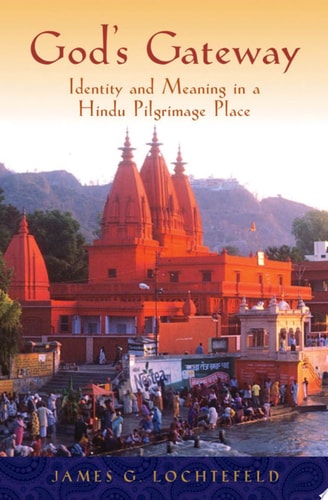
God's Gateway
0
0
As an Amazon Associate and affiliate partner, Menrva Books earns from qualifying purchases. Learn more
Author Description
A Celebrated Hindu Pilgrimage Site, Hardwar Lies On The River Ganges At The Edge Of The Himalayas. Its Identity As A Holy Place Is Inextricably Tied To The Mythology And Reality Of The Ganges, And Traditional Sources Overwhelmingly Stress This Connection. Virtually Nothing Has Been Written About Hardwar's History And Development, Although The Historical Record Reveals Striking Changes Of The Past Few Centuries. These Changes Have Usually Reflected Worldly Forces Such As Shifting Trade Routes, Improved Transportation, Or Political Instability. Yet Such Mundane Influences Have Been Ignored In The City's Sacred Narrative, Which Presents A Fixed, Unchanging Identity. The City's Complex Identity, Says Lochtefeld, Lies In The Tension Between These Differing Narratives. In This Fieldwork-based Study, Lochtefeld Analyzes Modern Hardwar As A Hindu Pilgrimage Center. He Looks First At Various Groups Of Local Residents -- Businessmen, Hereditary Priests, And Ascetics -- And Assesses Their Differing Roles In Managing Hardwar As A Holy Place. He Then Examines The Pilgrims And The Factors That Bring Them To Hardwar. None Of These Groups Is As Pious As Popularly Depicted, But Their Interactions In Upholding Their Own Interest Create And Maintain Hardwar's Religious Environment. In Conclusion, He Addresses The Wider Context Of Indian Pilgrimage And The Forces Shaping It In The Present Day. He Finds That Many Modern Hindus, Like Many Modern Christians, Feel Some Dissonance Between Traditional Religious Symbols And Their 21st-century World, And That They Are Reinterpreting Their Traditional Symbols To Make Them Meaningful For Their Time.
Menrva's Summary
THE THESIS
How does the city of Hardwar maintain a static, sacred identity despite the influence of shifting economic, political, and social forces over the last several centuries? James Lochtefeld, a scholar of religion, utilizes extensive fieldwork to investigate the discrepancy between the mythological narrative of Hardwar as an unchanging holy site and the historical reality of its development. By examining the interplay between local stakeholders—including priests, ascetics, and business owners—and the pilgrims who visit, the author argues that the city's religious environment is a product of competing human interests rather than a fixed divine manifestation.
THE SCOPE MAP
What You Will Find
- Analysis of the social hierarchy and economic motivations of local residents in Hardwar.
- Examination of the factors influencing modern pilgrimage patterns in India.
- A study of the tension between traditional religious symbolism and 21st-century secular realities.
- Fieldwork-based observations of interactions between priests, ascetics, and visitors.
Scope Limits
- The study focuses primarily on the modern era and the last few centuries of development.
- The text does not provide an exhaustive theological history of the Ganges river itself.
THE AUTHORITY PERSPECTIVE
Scholars and students of South Asian studies frequently cite this work for its grounded, empirical approach to the sociology of religion. Readers often note the academic density of the prose, which provides a rigorous framework for understanding how sacred spaces are constructed and maintained in a modern context.
Page Count:
328
Publication Date:
2010-01-01
Publisher:
Oxford University Press
ISBN-10:
0190452641
ISBN-13:
9780190452643
Religion
India
Pilgrimage
Sociology
Anthropology
Hinduism
Community Tags
Similar Books