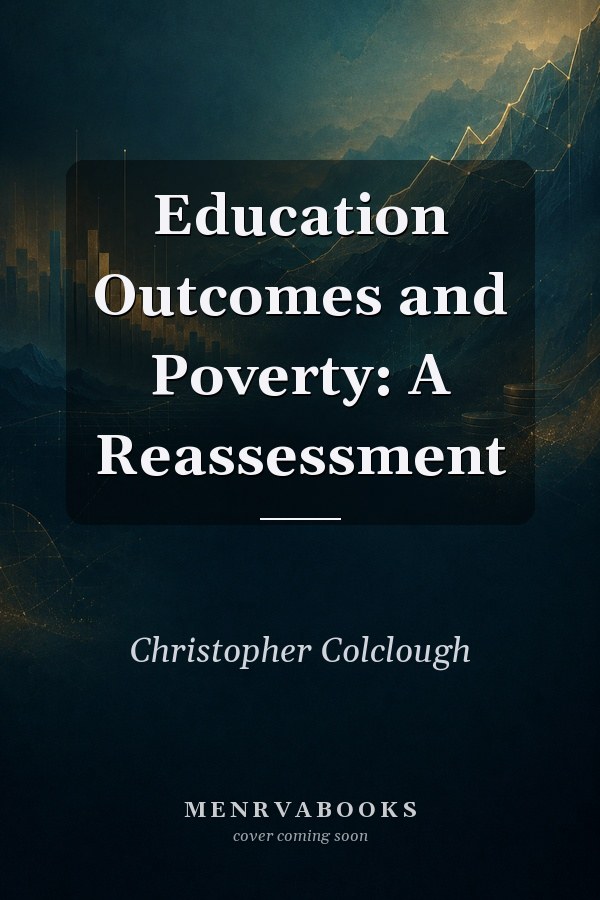
Education Outcomes and Poverty: A Reassessment
Author Description
What do we know about the outcomes of education in developing countries? Where are the gaps in our knowledge, and why are they important to fill? What are the policy challenges that underlie these knowledge gaps, and how can education best contribute to eliminating the problem of widespread poverty in the developing world?This book arises out of a five year, DFID-funded programme of research examining the impact of education on the lives and livelihoods of people in developing countries, particularly those living in poorer areas and from poorer households. Based on highly innovative research that addressed common research questions across four countries in Africa and South Asia, the book presents new theoretical and empirical knowledge that will help to improve education and poverty reduction strategies in developing countries, through an enhanced recognition of education's actual and potential role. In addition to introducing the reader to a wide range of conceptual and policy-related problems concerning the impact of education on individuals and society, the book:provides the field of educational research with a contemporary economic and socio-cultural reassessment of educational outcomes in relation to poverty. discusses the challenges and priorities facing policy makers, practitioners and the international development community in improving the outcomes of education, particularly for the most disadvantaged in Africa, South Asia and other low income countries; identifies the key theoretical and methodological challenges involved in researching the outcomes of education for the poor. This book will appeal to undergraduate and postgraduate students and researchers in the fields of international and comparative education, education policy, development studies, African and Asian studies and related disciplines, and to those working on education policy at national or international levels in governments and international institutions.
Menrva's Summary
THE THESIS
This book investigates the complex relationship between educational outcomes and poverty reduction in developing nations, questioning how education can effectively serve as a tool for socioeconomic advancement. Christopher Colclough, a prominent scholar in development economics, synthesizes findings from a five-year, DFID-funded research program to evaluate the impact of schooling on livelihoods in Africa and South Asia. The text challenges existing paradigms by presenting new empirical data that highlights the gap between educational access and tangible poverty alleviation, offering a framework for more effective policy intervention.
THE SCOPE MAP
What You Will Find
- Comparative analysis of educational impacts across diverse regions in Africa and South Asia.
- Theoretical and methodological frameworks for assessing the link between schooling and household poverty.
- Empirical data derived from a five-year longitudinal research program.
- Policy recommendations for international development agencies and national governments.
THE AUTHORITY PERSPECTIVE
Experts recognize this work as a significant contribution to the field of international development, particularly for its rigorous approach to evaluating educational outcomes. Scholars and policy practitioners frequently cite the text as a foundational resource for understanding the socio-economic complexities of education in low-income contexts.
Page Count:
240
Publication Date:
2012-01-01
Publisher:
Routledge
ISBN-10:
0415582024
ISBN-13:
9780203817667
Economics
Effect of education on
Education
Poverty
Public Policy
Sociology
Community Tags
Similar Books