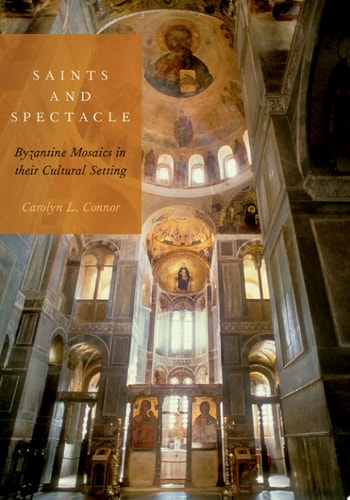
Saints and Spectacle
0
0
As an Amazon Associate and affiliate partner, Menrva Books earns from qualifying purchases. Learn more
Author Description
Saints And Spectacle Examines The Origins And Reception Of The Middle Byzantine Program Of Mosaic Decoration. This Complex And Colorful System Of Images Covers The Walls And Vaults Of Churches With Figures And Compositions Seen Against A Dazzling Gold Ground. The Surviving Eleventh-century Churches With Their Wall And Vault Mosaics Largely Intact, Hosios Loukas, Nea Moni And Daphni In Greece, Pose The Challenge Of How, When And Where This Complex And Gloriously Conceived System Was Created. Using An Interdisciplinary Approach, Connor Explores The Urban Culture And Context Of Church-building In Constantinople, Capital Of The Byzantine Empire, During The Century Following The End Of Iconoclasm, Of Around 843 To 950. The Application Of An Innovative Frame Of Reference, Through Ritual Studies, Helps Recreate The Likely Scenario In Which The Medium Of Mosaics Attained Its Highest Potential, In The Mosaiced Byzantine Church. For Mosaics Were Enlisted To Convey A Religious And Political Message That Was Too Nuanced To Be Expressed In Any Other Way. At A Time Of Revival Of Learning And The Arts, And Development Of Ceremonial Practices, The Byzantine Emperor And Patriarch Were United In Creating A Solution To The Problem Of Consolidating The Greek Orthodox Byzantine Empire. It Was Through Promoting A Vision Of The Unchallengeable Authority Residing In God And His Earthly Representative, The Emperor. The Beliefs And Processional Practices Affirming The Protective Role Of The Saints In Which The Entire City Participated, Were Critical To The Reception Of This Vision By The Populace As Well As The Court. Mosaics Were A Luxury Medium That Was Ideally Situated Aesthetically To Convey A Message At A Particularly Important Historical Moment--a Brilliant Solution To A Problem That Was To Subtly Unite An Empire For Centuries To Come. Supported By A Wealth Of Testimony From Literary Sources, Saints And Spectacle Brings The Middle Byzantine Church To Life As The Witness To A Compelling
Menrva's Summary
THE THESIS
This work investigates the origins and socio-political function of the Middle Byzantine mosaic decoration program as a tool for imperial and religious consolidation. Carolyn L. Connor, an expert in Byzantine art and culture, utilizes an interdisciplinary framework to analyze how these visual systems were deployed in Constantinople between 843 and 950. She argues that the development of these elaborate church interiors served as a sophisticated medium for reinforcing the authority of the Emperor and the Patriarch during a period of cultural and political reconstruction.
THE SCOPE MAP
What You Will Find
- Analysis of the mosaic programs at Hosios Loukas, Nea Moni, and Daphni.
- Application of ritual studies to interpret the function of church interiors.
- Examination of the intersection between urban culture, ceremonial practice, and religious art.
Scope Limits
- The study focuses primarily on the period between 843 and 950 and does not provide an exhaustive survey of all Byzantine art history.
- The text prioritizes the political and ritual context of the mosaics over a purely technical or chemical analysis of the materials used.
THE AUTHORITY PERSPECTIVE
Scholars and students of Byzantine history frequently cite this text for its innovative use of ritual studies to bridge the gap between architectural history and political theory. Readers note that the prose is academically rigorous and provides a dense, well-supported argument regarding the intersection of art and statecraft.
Page Count:
200
Publication Date:
2016-01-01
Publisher:
Oxford University Press
ISBN-10:
0190457635
ISBN-13:
9780190457631
Religion
History
Architecture
Art History
Community Tags
Other Editions(2)

Similar Books



Reader Comments
Share Your Thoughts
No comments yet. Be the first to share your thoughts!