Victor Vasarely, 1906-1997: Pure Vision
0
0
As an Amazon Associate and affiliate partner, Menrva Books earns from qualifying purchases. Learn more
Author Description
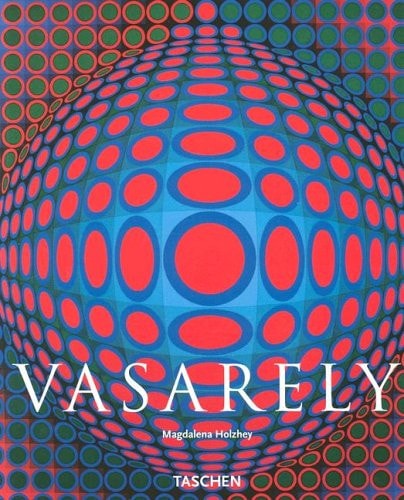
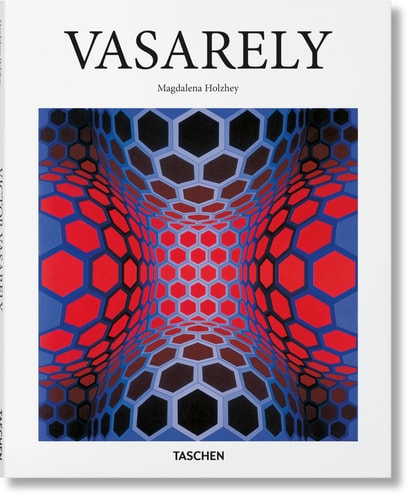
Hungarian-French painter Victor Vasarely (1906-1997) was a precocious talent. His earliest surviving painting, a landscape done at age 12, baffled through its realism--an indication of the compelling illusions of spatial depth that would later define his dazzling universe. Inspired by the likes of Malevich and the Bauhaus school, Vasarely developed his own abstract-geometric visual language, exploring the relationship between pure form and pure color. Vasarely's experimentation with optical effects in the 1940s and '50s earned him a central role in the evolution of Op Art. By the late '50s and early '60s, he concentrated on the "democratization of art" by producing "multiples"--reasonably priced original works reproduced in large editions. Vasarely's attempt to "destroy the completely obsolete myth of the unique, inimitable masterwork" was a tremendous contribution to art theory. To him, there was no place for hierarchical division into originals and reproductions, nor for distinction between fine and commercial art--"We cannot leave the enjoyment of art to an elite of connoisseurs forever," he declared. This redefinition of the artist's position and function in society marked a crucial first step in the Pop Art movement. Vasarely's boldly colorful and eye-popping paintings are instantly recognizable and remain entirely modern and relevant today. In this dependable introduction, we explore the makings of an artist ahead of his time. Crisp reproductions and insightful texts celebrate the father of the Op Art movement, from his earliest hypnotizing optical illusions to his hallmark checkerboard works.
Menrva's Summary
THE THESIS
Victor Vasarely's artistic legacy is defined by his pioneering exploration of abstract-geometric visual language and optical illusions. Magdalena Holzhey's introduction delves into the life and work of the Hungarian-French painter, tracing his development from early realistic landscapes to his signature Op Art style. Inspired by movements like the Bauhaus, Vasarely focused on the interplay of pure form and color, creating works that challenged perceptions of depth and space. The book highlights his commitment to the
THE SCOPE MAP
- Exploration of Victor Vasarely's early life and precocious talent, including his earliest surviving realistic painting.
- Analysis of Vasarely's abstract-geometric visual language, influenced by artists like Malevich and the Bauhaus school.
- Detailed examination of his experimentation with optical effects, which positioned him as a central figure in the Op Art movement.
- Discussion of Vasarely's philosophy of art democratization through the production of affordable "multiples."
- Insight into his theoretical contributions, challenging the concept of the unique masterwork and blurring lines between fine and commercial art.
- Connection of Vasarely's ideas to the nascent Pop Art movement and his redefinition of the artist's societal role.
- Showcase of his boldly colorful and eye-popping paintings, emphasizing their enduring modernity.
- Presentation of crisp reproductions and insightful texts celebrating his contributions, from early illusions to hallmark checkerboard works.
THE AUTHORITY PERSPECTIVE
This dependable introduction to Victor Vasarely is celebrated for its insightful exploration of his artistic innovations and theoretical contributions. The book is noted for its crisp reproductions and insightful texts that effectively capture the essence of the father of the Op Art movement. It highlights his significant role in art theory and his forward-thinking approach to art accessibility, which laid groundwork for subsequent art movements. The work is recognized for presenting Vasarely's instantly recognizable and modern paintings in a way that remains relevant today.
Page Count:
95
Publication Date:
2018-01-01
Publisher:
Taschen
ISBN-10:
3836573954
ISBN-13:
9783836573955
Non-Fiction
Art
Abstract Art
Modern Art
Art History